
部
Components
Point of interest: Monkeys in Japanese and Japanese culture
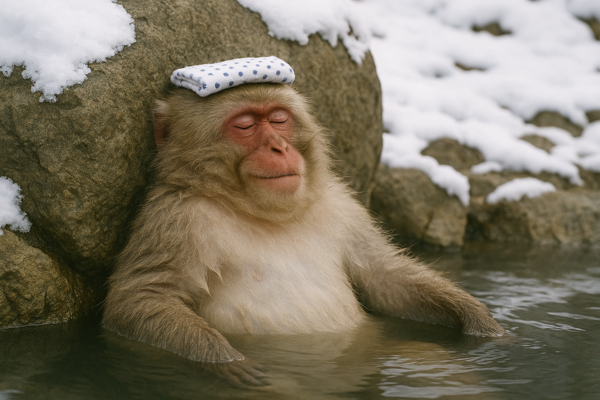
Many people around the world recognise Japan's famous snow monkeys relaxing in hot springs. However, monkeys
さる
猿
(saru) have a much deeper place in Japanese culture. From ancient shrines to traditional stories and everyday proverbs, they have many different roles. Sometimes they are seen as sacred messengers and protectors, while at other times they are playful tricksters.Kanji and Readings

さる
猿
is the ordinary kanji for monkey. It refers to the animal itself and appears in words such as にほんざる
日本猿
(Nihon-zaru – Japanese macaque)さる
申
is the ninth sign of the Chinese zodiac えと
干支
(eto). Although it is also read さる, it does not mean "monkey" on its own. Instead, it represents the Year of the Monkey and is commonly seen in zodiac calendars, New Year's decorations, and discussions of the Chinese zodiac.noun
ninth sign of Chinese zodiac (The Monkey, 3pm-5pm, west-southwest, July)(click the word for examples and links)
Japanese wordplay and monkeys
Japanese has many homophones—words that sound the same but have different meanings. This makes wordplay very common, and monkeys, "
さる
猿
", appear in one of Japan's best-known examples.The Three Wise Monkeys さんざる三猿 (sanzaru)
You have probably seen the three monkeys who "see no evil, hear no evil, speak no evil"
み 見 ざる | See no evil. |
き 聞 かざる | Hear no evil. |
い 言 わざる | Speak no evil. |
The ending ざる "zaru" is an old Japanese negative verb ending that means "not" (similar to the modern ending ~ない). For example,
み
見
ざる means "not see."
The clever part is that ざる sounds like
さる
猿
(saru). This playful pun inspired the famous image of three monkeys representing the ideas of:
み
見
ざるき
聞
かざるい
言
わざる see no evil, hear no evil, and speak no evilWhile the philosophy behind "see no evil, hear no evil, speak no evil" has its origins in Buddhist tradition, the iconic Three Wise Monkeys,
さんざる
三猿
, are a distinctly Japanese creation.The standard reading of 三猿 is
, but the Three Wise Monkeys are almost always referred to as さんざる. This special reading highlights the wordplay between the old negative ending -ざる and
.
さんえん
三猿
three wise monkeys (who "see no evil, hear no evil, and speak no evil")さる
猿
, which is central to the pun
み
見
ざるき
聞
かざるい
言
わざる see no evil, hear no evil, and speak no evilThe word
さる
猿
is a homophone of the verb さ
去
る, meaning "to leave" or "to depart." Because of this, monkeys were traditionally seen as living talismans that could make bad luck and illness "go away." This wordplay is also reflected in the expression まさ
魔去
る, literally meaning "evil departs."Monkey proverbs and expressions for everyday conversation
Monkeys are not only found in Japanese folklore and religion, they also appear in everyday language. These well-known proverbs and expressions are still used today to describe people, relationships, and common situations.
expression, ichidan verb
even monkeys fall from trees; anyone can make a mistake; pride comes before a fall; even Homer sometimes nods(click the word for examples and links)
noun, 'no' adjective
loggerheads; like cats and dogs; relationship of dogs and monkeys(click the word for examples and links)
noun, 'suru' verb
indiscriminate imitation; monkey see, monkey do; blind follower(click the word to view an additional 1 form, examples and links)
noun
shallow cunning; shallow cleverness(click the word to view an additional 1 reading, examples and links)
From sacred messengers to anime icons
Long before modern manga and anime, monkeys were revered as
for certain Shinto deities. At Nikkō
, the famous Three Wise Monkeys adorn the Sacred Horse Stable, reflecting the traditional belief that monkeys protected horses from disease and misfortune.
かみ
神
のつか
使
い divine messenger; messenger of a god (esp. an animal messenger)とうしょうぐう
東照宮
Toshogu ShrineMonkeys also appear in many famous stories and works of popular culture:
ももたろう
桃太郎
The Peach Boy: A loyal monkey companion helps the Peach Boy defeat ogres on Onigashima.さるかにがっせん
猿蟹合戦
The Crab and the Monkey : A well-known folktale in which a greedy monkey is taught an important lesson.そんごくう
孫悟空
: Inspired by Sun Wukong, the Monkey King from the Chinese classic Journey to the West, this legendary character became the inspiration for Akira Toriyama's hero in Dragon Ball.Year of the Monkey and the Chinese zodiac
For more information see our overview of the Chinese zodiac.
12 kanji are used in the signs of the zodiac, and all are actually 'common' in daily Japanese because of the prevalent use of the zodiac: 子丑寅卯辰巳午未申酉戌亥. However, interestingly only 5 of those kanji are Joyo!
Real-life encounters: The Japanese macaque
Japan's native primate is the Japanese macaque
. These hardy monkeys are the northernmost living non-human primates in the world and are well adapted to Japan's cold winters.
にほんざる
日本猿
Japanese macaque (Macaca fuscata)At Jigokudani Wild Monkey Park
じごくだにやえんこうえん
地獄谷野猿公苑
in Nagano Prefecture, troops of wild macaques descend from the surrounding forests to bathe in natural hot springs during the freezing winter months. This remarkable behavior is unique to the monkeys of this region and has made them one of Japan's most recognizable wildlife attractions.Whether you encounter them in a steaming onsen, a familiar proverb, or an ancient folktale, monkeys offer a fascinating gateway to Japan's language, culture, and traditions.
Kanji used in this point of interest
Problem with this point of interest? Question or
comment? Please CONTACT US.
Kanshudo is your AI Japanese tutor, and your constant companion on the road to mastery of the Japanese language.
To get started learning Japanese, just follow the study recommendations on your Dashboard.
You can use Quick search (accessible using the icon at the top of every page) to look up any Japanese word, kanji or grammar point, as well as to find anything on Kanshudo quickly.
For an overview, take the tour.
