
100
Bundle 100: "Ido" Era: Reshaping Japan

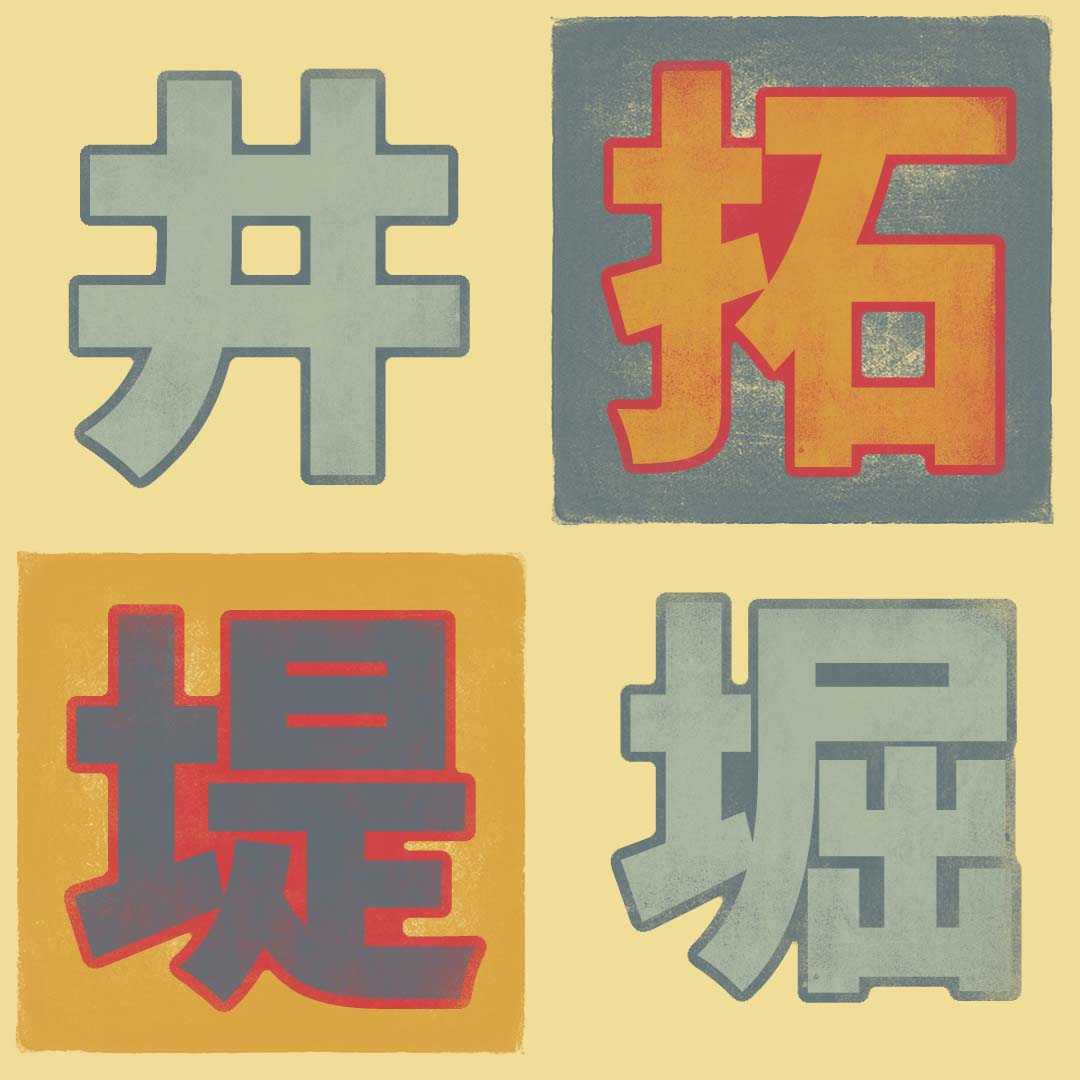
井
well
JOK: 1470
Why have the Japanese worshipped well water, shouted down wells, and jokingly called the Edo era the "Ido" era? How do people use the shape of a well in everything from kimono cloth to business slang? How does 井 figure into economic and political discussions? Find out all of this and much more, including the role of wells in folktales, proverbs, and Haruki Murakami's fiction.
拓
clear the way
JOK: 1554
This kanji embodies the spirit of visionaries who see possibilities, people who want to carve out the future, and pioneers who blaze mountain trails, develop land that’s under the sea, and grow olives on Shodoshima. Learn to say, “He devoted half of his life to developing Hokkaido,” “We have to find a new market for these products,” and even “I haven't tried restaurants around here.”
堤
embankment
JOK: 1620
Embankments save lives and could even be why we have government! But they're so well integrated into landscapes that you could walk on an embankment and not know it. See why Japan has built these structures for millennia. (A folktale particularly brings the topic to life.) Also find out about embankment stew, tsutsumi dolls, 'super embankments,' and a "battleship seawall."
堀
ditch
JOK: 1824
Through this photo-rich essay (which includes gorgeous pictures of castle towers alongside moats), you'll learn why the Japanese sometimes created dry moats, how moats with lattice bottoms deterred enemies, how moat layout related to socioeconomic strata, how both moats and canals have left marks on Tokyo and Osaka, what it means to "bridge a moat" figuratively, and more!
Kanshudo is your AI Japanese tutor, and your constant companion on the road to mastery of the Japanese language.
To get started learning Japanese, just follow the study recommendations on your Dashboard.
You can use Quick search (accessible using the icon at the top of every page) to look up any Japanese word, kanji or grammar point, as well as to find anything on Kanshudo quickly.
For an overview, take the tour.
