
102
Bundle 102: Edo Era: Draconian Punishments

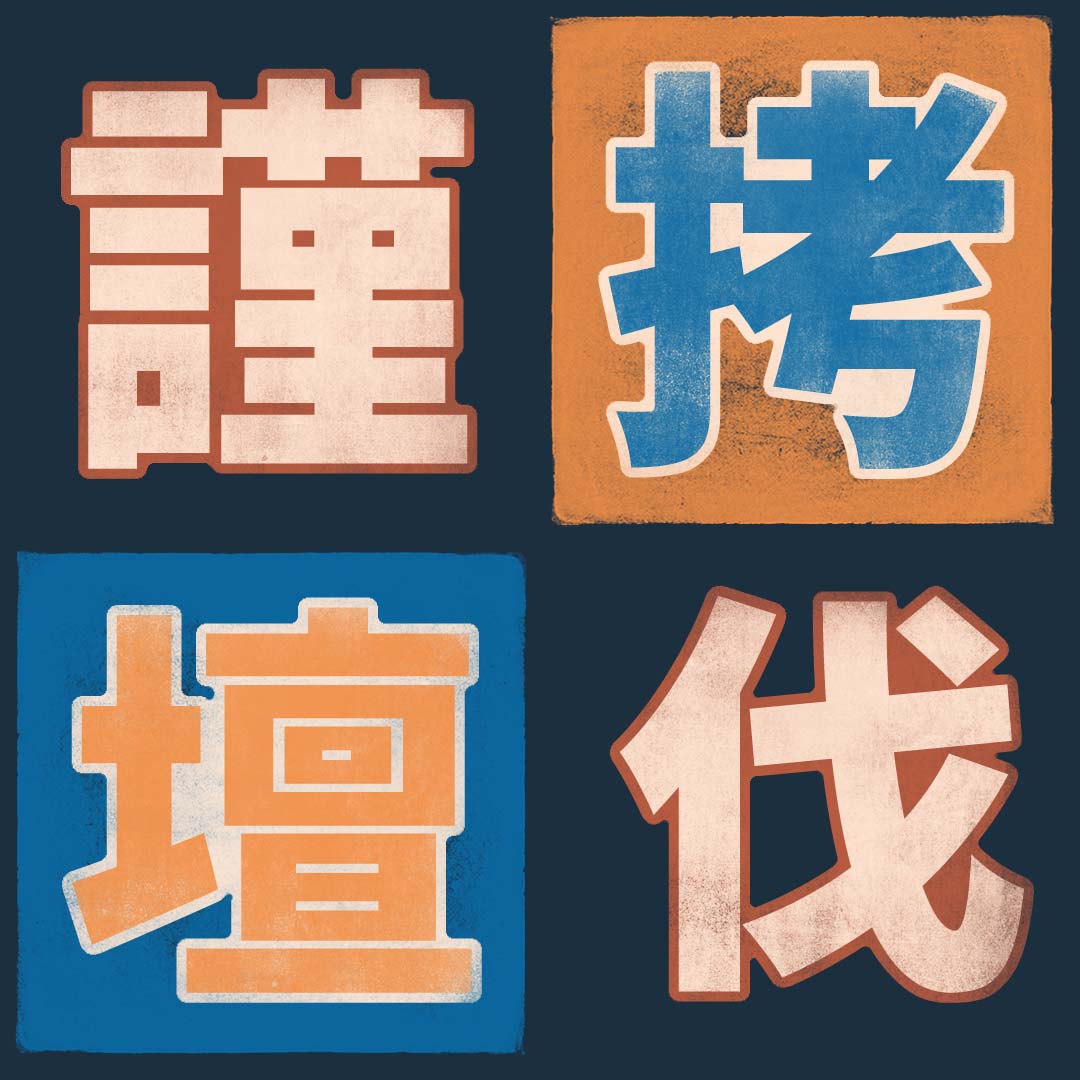
謹
discreet
JOK: 1180
Learn about a New Year’s greeting that you’ll read but not hear. See what it means when 謹製 is stamped on products in red. Find out how to talk about being conscientious and careful (e.g., with words) or conversely indiscreet (in oh so many ways!). Read about stay-at-home orders that long preceded our current era, as well as respectful terms to include in formal letters.
拷
torture
JOK: 1269
If modern life involves unbearable cruelty, it’s oddly comforting that the past was even more brutal. Old Japanese payback for crimes included slicing off someone's nose and sawing off somebody’s head over several days. Learn to say, "The torture made him confess to crimes he had not committed," "The cruelty of the torture is beyond description," and "The prisoner died under torture."
壇
podium
JOK: 1571
An altar may be the spiritual center of a Buddhist household, but that doesn't mean it can't be heavily marketed. By studying text and photos used to sell all styles of household altars, you'll become an altar expert. Enjoy colorful photos of temple altars from Malaysia to Japan. Also find out about Edo-era execution methods and how they relate to a figurative expression used today.
伐
fell (an enemy)
JOK: 1707
See how trees can be difficult! Find out why marketers emphasize that products have been made from wood felled in thinning the forest, and discover the thinking behind thinning forests at all. Then explore figurative uses of 伐 in terms about savage behavior, punitive expeditions to subjugate rebels, and the conquest of other countries. Also learn about a Japanese Robin Hood!
Kanshudo is your AI Japanese tutor, and your constant companion on the road to mastery of the Japanese language.
To get started learning Japanese, just follow the study recommendations on your Dashboard.
You can use Quick search (accessible using the icon at the top of every page) to look up any Japanese word, kanji or grammar point, as well as to find anything on Kanshudo quickly.
For an overview, take the tour.
