
108
Bundle 108: Meiji Era: New Names All Around

京
capital
JOK: 99
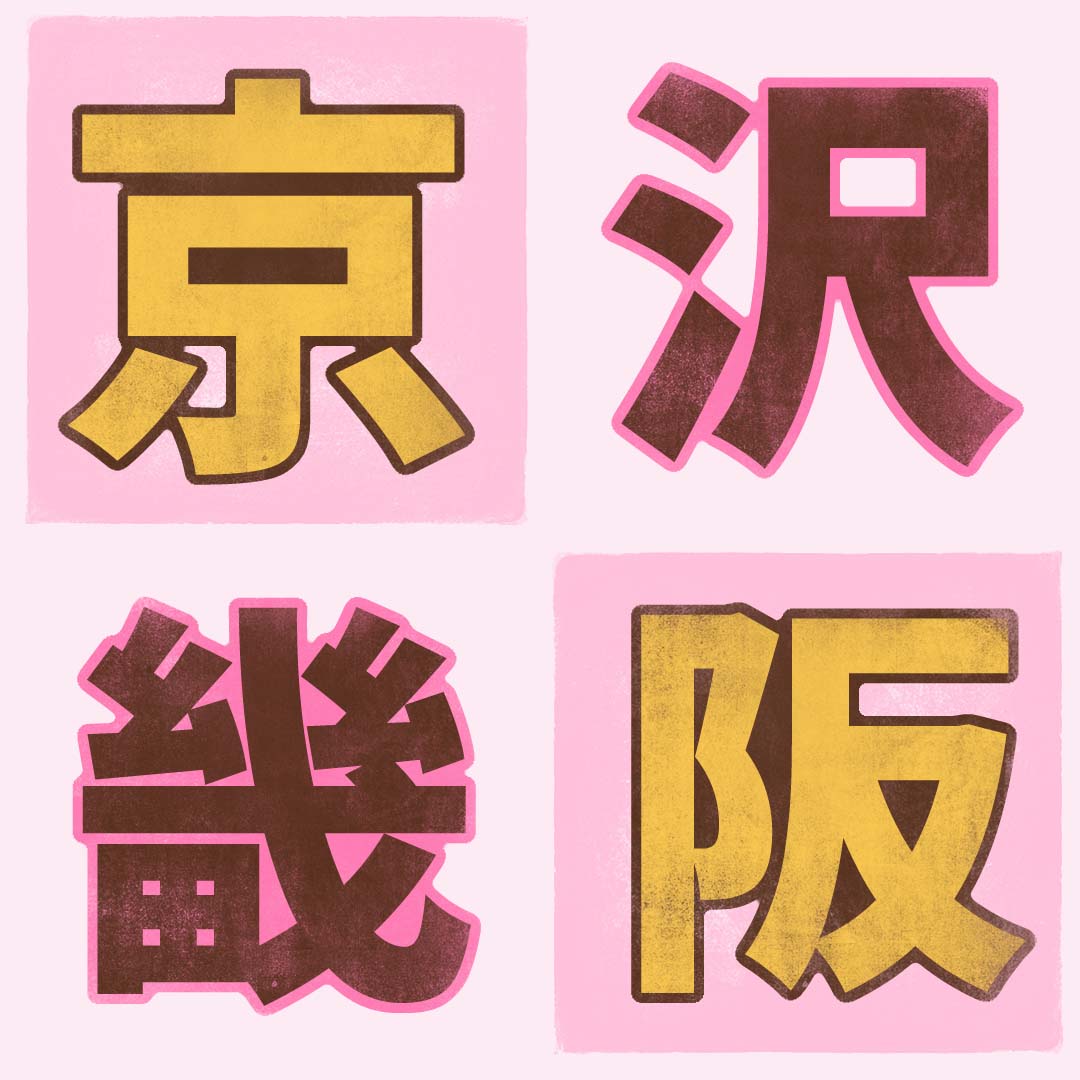
Learn to associate the キョウ, ケイ, and キン readings of 京 with very different contexts. Find out which three cities this character can represent. See how 京 pairs with all cardinal directions—but how “western capital” and “southern capital” aren’t what you’d expect. (One has a relationship to miso, the other to peanuts!) And learn about the people of Tokyo and Kyoto through old proverbs.
沢
marsh
JOK: 1552
For a kanji that appears in relatively few compounds and that means 'marsh,' 'plentiful,' 'to glisten,' and 'benefit' (a range that makes the head spin), 沢 seems to poke its head up in quite a few places. It's the 489th most used kanji in newspapers. That's puzzling, but this essay will reveal the reason. It will also teach you the names of several types of dishes, help you talk about luxury, and put the luster back in your life (if it's missing).
畿
city
JOK: 1986
This essay presents everything you always wanted to know about the Kinki region but were afraid to ask! Learn the origin of the name "Kinki," and see how that region compares with Kansai. Find out about a railroad named after the tango, a snack that tastes like deep-fried meat, and old nomenclature for the Kinki area. Also discover what a 都道府県別 approach involves.
阪
slope
JOK: 2097
Enter the city of pleasure! This essay covers everything about Osaka, including its name, history, cuisine (e.g., Kansai sushi), castle, and entertainment industry, as well as the Osakan's colorful personality, conversational style, accent, and dialect. Learn about the "Osaka Metropolis Plan" that terrified some people, and find out about often-used terms such as "Keihan" and "Hanshin.'
Kanshudo is your AI Japanese tutor, and your constant companion on the road to mastery of the Japanese language.
To get started learning Japanese, just follow the study recommendations on your Dashboard.
You can use Quick search (accessible using the icon at the top of every page) to look up any Japanese word, kanji or grammar point, as well as to find anything on Kanshudo quickly.
For an overview, take the tour.
