
114
Bundle 114: Meiji Era: Women's Roles Shift

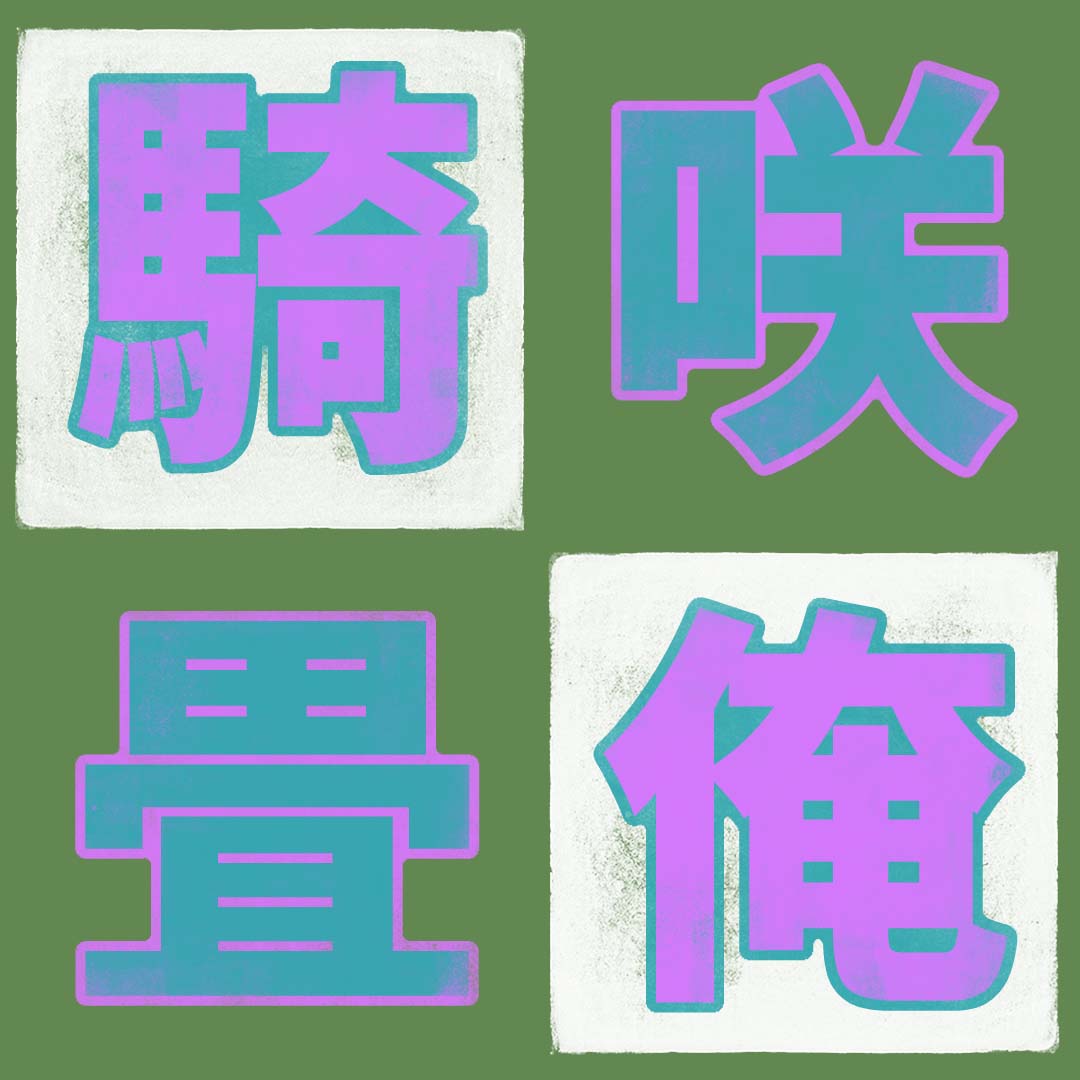
騎
equestrian
JOK: 1133
Find out about a Japanese tradition of shooting at archery targets from galloping horses. Learn the courteous rituals samurai engaged in before killing each other. See what "white knight" means to Japanese businesspeople. Also discover a theory linking the Japanese and Mongols, a military term related to dragons, and a word relevant both to controlling a horse and to nigiri sushi.
咲
blossom
JOK: 1303
Learn to discuss literal blooming, as in, "All the cherry trees in the park are in full bloom," "The buds burst open as soon as spring comes," and "The trees lining the street have lovely blossoms in spring." Also discover the abundant figurative uses of 咲, including ways to say, "He became famous as a late-blooming actor" and "Once you're dead, that's it."
畳
fold
JOK: 1419
Find out how 畳 can represent both rigid tatami mats and foldable items. See how the mats relate to cobblestones, sardines, wives, and bald priests. Learn to discuss room size in terms of these mats, even if the room contains none. Read about formerly X-rated restaurant waiting rooms. And discover why two famous directors dissed documentaries, despite having made them.
俺
me
JOK: 1970
Some sources call 俺 rough, arrogant, vulgar, and disagreeable. Others say it is informal and intimate. It conveys manliness, which could imply control over emotions, but it is also the pronoun men use when they lose their cool. All these contradictory statements are true! The mere idea of adding 俺 to the Joyo list provoked a bitter battle. Find out how and why men use this charged word.
Kanshudo is your AI Japanese tutor, and your constant companion on the road to mastery of the Japanese language.
To get started learning Japanese, just follow the study recommendations on your Dashboard.
You can use Quick search (accessible using the icon at the top of every page) to look up any Japanese word, kanji or grammar point, as well as to find anything on Kanshudo quickly.
For an overview, take the tour.
