
87
Bundle 87: Edo Era: Spirit of the Times

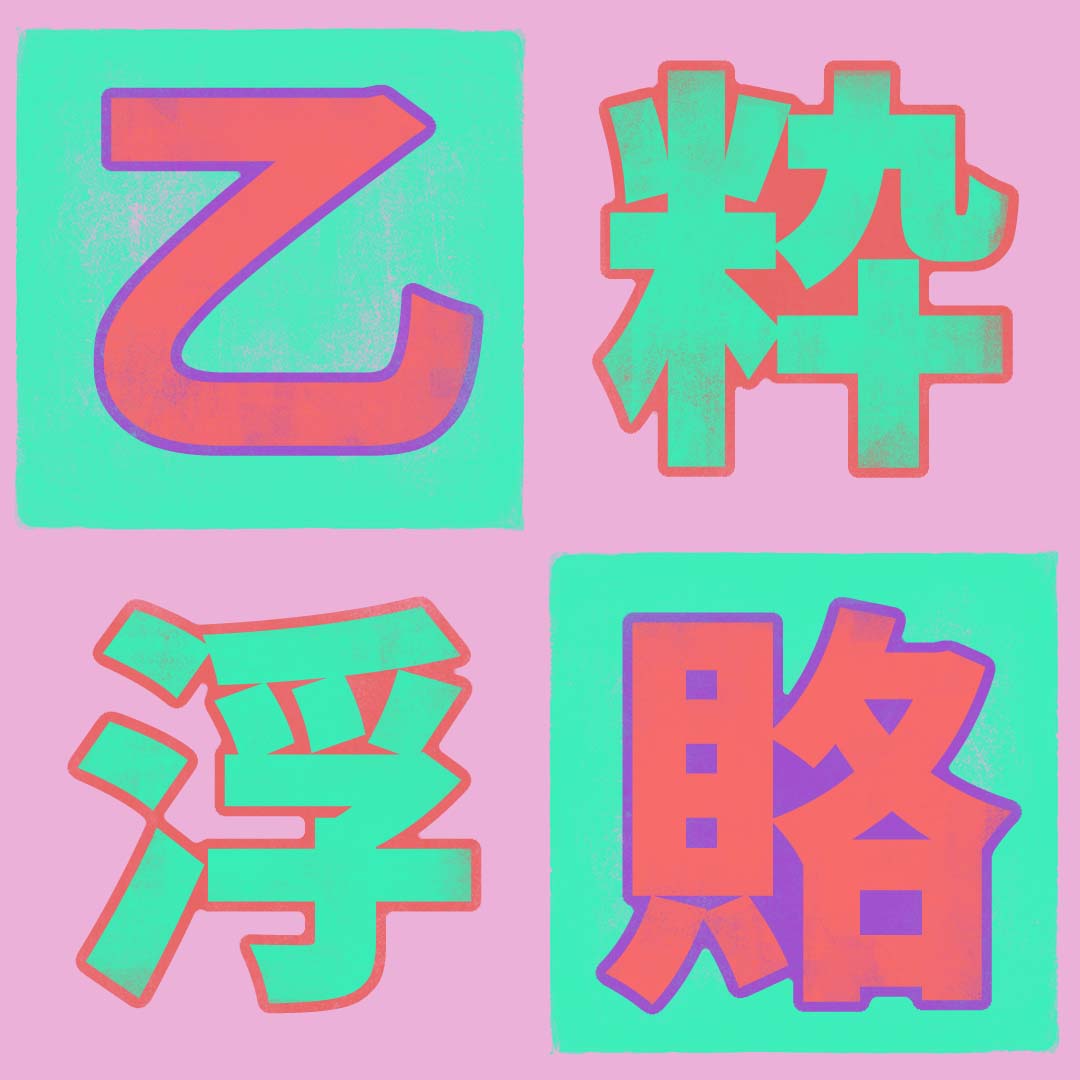
乙
second
JOK: 1041
A kanji with a dizzying array of meanings, 乙 enables you to sequence items or rank them by quality. It also has definitions related to music, inventive tastes, young women, wit, astrology, and proofreading! This kanji cuts a fine form with its distinctive one-stroke swoosh, which is apt, as it can mean 'stylish.' On top of that, the 'fishhook' radical 乙 appears in several Joyo kanji.
粋
purity
JOK: 1455
By studying 粋, you might learn how to be cool, and you’ll definitely learn to comment on people’s failed attempts at stylishness! You’ll immerse yourself in the spirit of Edo culture and see how it permeates the language today. Plus, you’ll discover words for “purity,” “nationalism,” and “the best of technology,” also finding out how to say “He is a Parisian through and through.”
浮
float
JOK: 1752
See what role 浮 plays in dejection and in happiness so intense that it causes accidents. Find out what "loose teeth" means figuratively. Learn to say 'I feel out of place,' 'The tree stands out against the sky,' and 'He's cheating.' Discover what floated in the "Floating World" of Edo. Inspire memories and ideas by combining body parts with 浮. Also learn about maglev trains in Japan!
賂
bribe
JOK: 1952
The Japanese are known for honesty, but there’s still a long history of bribery (especially in the Edo era) and plenty of ways of talking about it. Learn to say, “Did you or did you not accept the bribe?”, “Everybody suspected him of taking a bribe,” and “He is the last man to take a bribe.” Also find out about mnemonics involving Cairo and greasing someone’s palm with mayonnaise!
Kanshudo is your AI Japanese tutor, and your constant companion on the road to mastery of the Japanese language.
To get started learning Japanese, just follow the study recommendations on your Dashboard.
You can use Quick search (accessible using the icon at the top of every page) to look up any Japanese word, kanji or grammar point, as well as to find anything on Kanshudo quickly.
For an overview, take the tour.
