
93
Bundle 93: Edo Era: Performing Arts

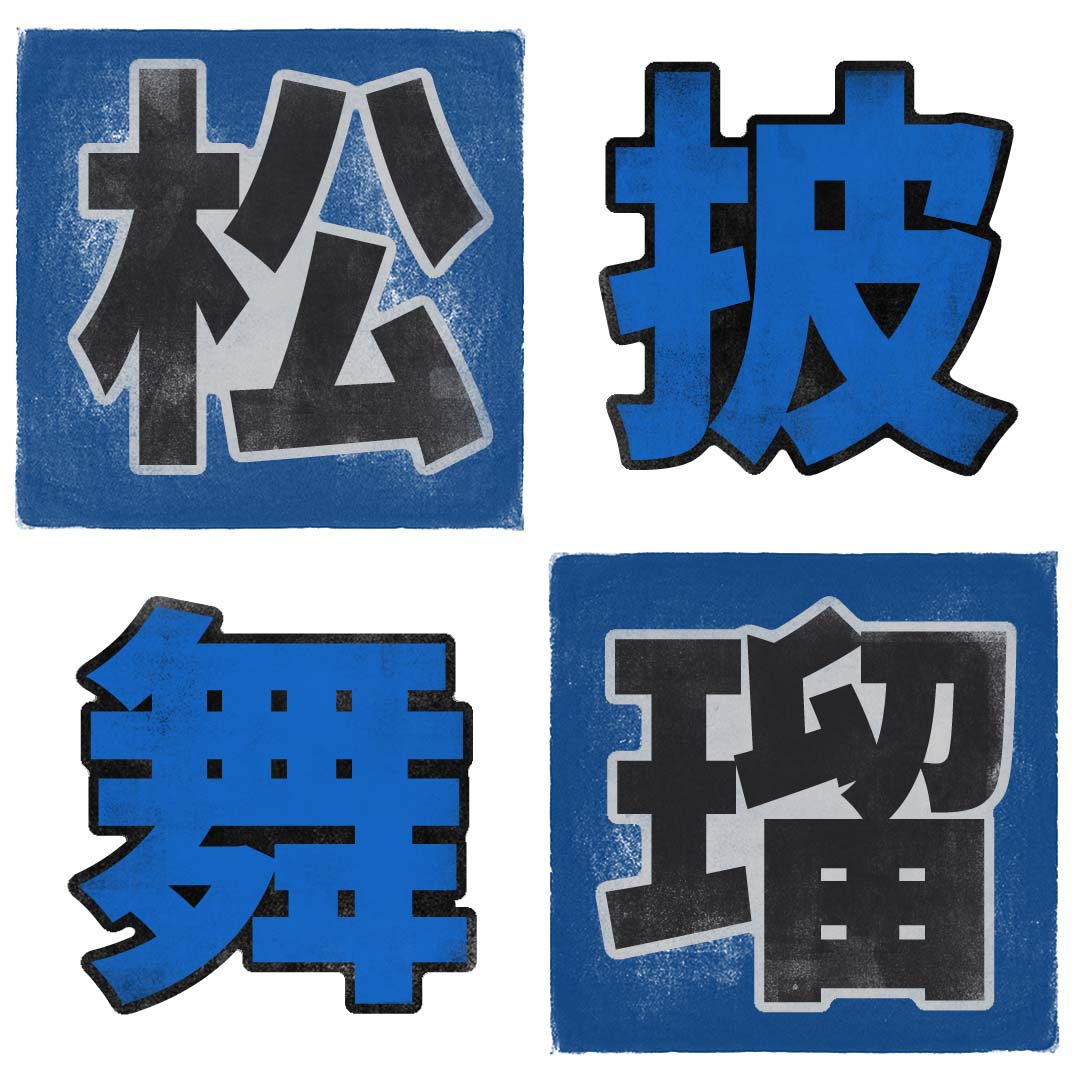
松
pine tree
JOK: 1394
See how pines connect to New Year's rituals, Noh plays, Basho, bamboo and ume (symbolically), and matsutake mushrooms. Discover a pine tree that matters in Buddhism and twin pines that represent marital happiness, as well as figurative uses of "pine needle." Learn about two sarin gas attacks and the sabotage of railroad lines. Also find out about cows that receive regular massages.
披
exposed
JOK: 1726
With 披, it's as if trumpets have sounded. This kanji enables you to unveil plans, make announcements, debut songs, and show what you're capable of doing. Connected with introductions, displays, and performances, 披 pops up in contexts ranging from weddings to kabuki and Noh to sumo. But this kanji also has a sensitive side; with 披 you can pour out your innermost feelings.
舞
dance
JOK: 1761
Traditional Japanese dance may seem tangential to your life, but it has connections to the gods, so don't overlook it! Also, 舞 is a core part of Nihongo, factoring into terms for bustling activity, story settings, being in the limelight, behaving well or badly, treating others to meals, visiting the sick, seasonal greeting cards, and closing up shop, as well as the words for kabuki and butoh.
瑠
lapis lazuli
JOK: 2135
Find out why {search[瑠璃](るり)} can represent glass, as well as the mineral lapis lazuli and the bright blue color of that stone. Using {search瑠璃} people convey the blueness of everything from our planet as seen from space to the hue of flowers, birds, butterflies, and one kind of cockroach! Lapis is even the color of courage! Also learn about the performing art known as joruri, and see how it relates to puppet theater.
Kanshudo is your AI Japanese tutor, and your constant companion on the road to mastery of the Japanese language.
To get started learning Japanese, just follow the study recommendations on your Dashboard.
You can use Quick search (accessible using the icon at the top of every page) to look up any Japanese word, kanji or grammar point, as well as to find anything on Kanshudo quickly.
For an overview, take the tour.
