
94
Bundle 94: Edo Era: Red-Light Districts

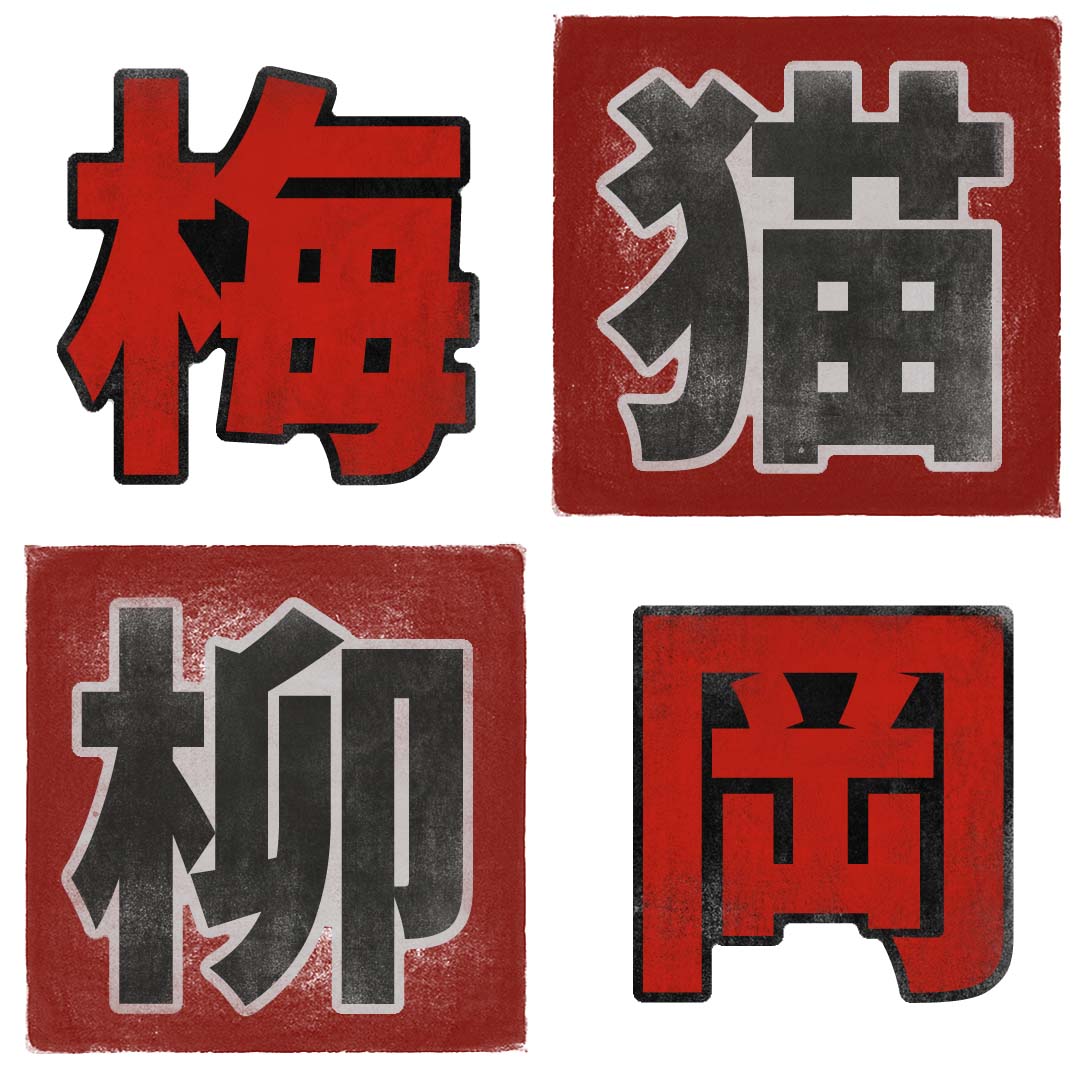
梅
plum tree
JOK: 1689
See how Japanese apricots (ume) relate to the rainy season, the new year, haiku, Osaka, a god sleeping in poisonous ume pits, shochu, senbei, syphilis, pine and bamboo, and childbirth. See how ume blossoms have inspired paintings, sweets, and color terms. Also read about ume-related pickles, a manly candy, flying ume, and shrines with connections to ume.
猫
cat
JOK: 1742
The cat is omnipresent in Japan, appearing in nearly every house in olden times and in cat cafes today. Having inspired scads of charming expressions, as well as Hello Kitty and beckoning porcelain figurines, cats have also stimulated the imaginations of creative types from Kuniyoshi to Soseki and Haruki Murakami. Find out why Japanese people have such deep affection for cats.
柳
willow
JOK: 1898
Willows play important roles in Japan, lining rivers in several cities (and the streets of Ginza in Tokyo) and frequently appearing in ink paintings. Using pliable willow wood, people make everything from chopsticks and wicker to medicine. Sayings about taking things in stride often include 柳. There's also a link between 柳 and geisha, as well as a connection between willows and ghosts!
岡
hill
JOK: 1968
Find out what role 岡 (primarily 'hill') could possibly play in a bathhouse, on an inkstone, in a wooden carrying box, in unrequited love, and in a 2nd-class red-light district. The essay provides connective thread between uses of 岡 that otherwise seem completely random. See how 岡 relates to 丘, another kanji for "hill." And enjoy a bevy of photos with 岡 in the names of people and places.
Kanshudo is your AI Japanese tutor, and your constant companion on the road to mastery of the Japanese language.
To get started learning Japanese, just follow the study recommendations on your Dashboard.
You can use Quick search (accessible using the icon at the top of every page) to look up any Japanese word, kanji or grammar point, as well as to find anything on Kanshudo quickly.
For an overview, take the tour.
