
97
Bundle 97: Edo Era: New Industries Emerge

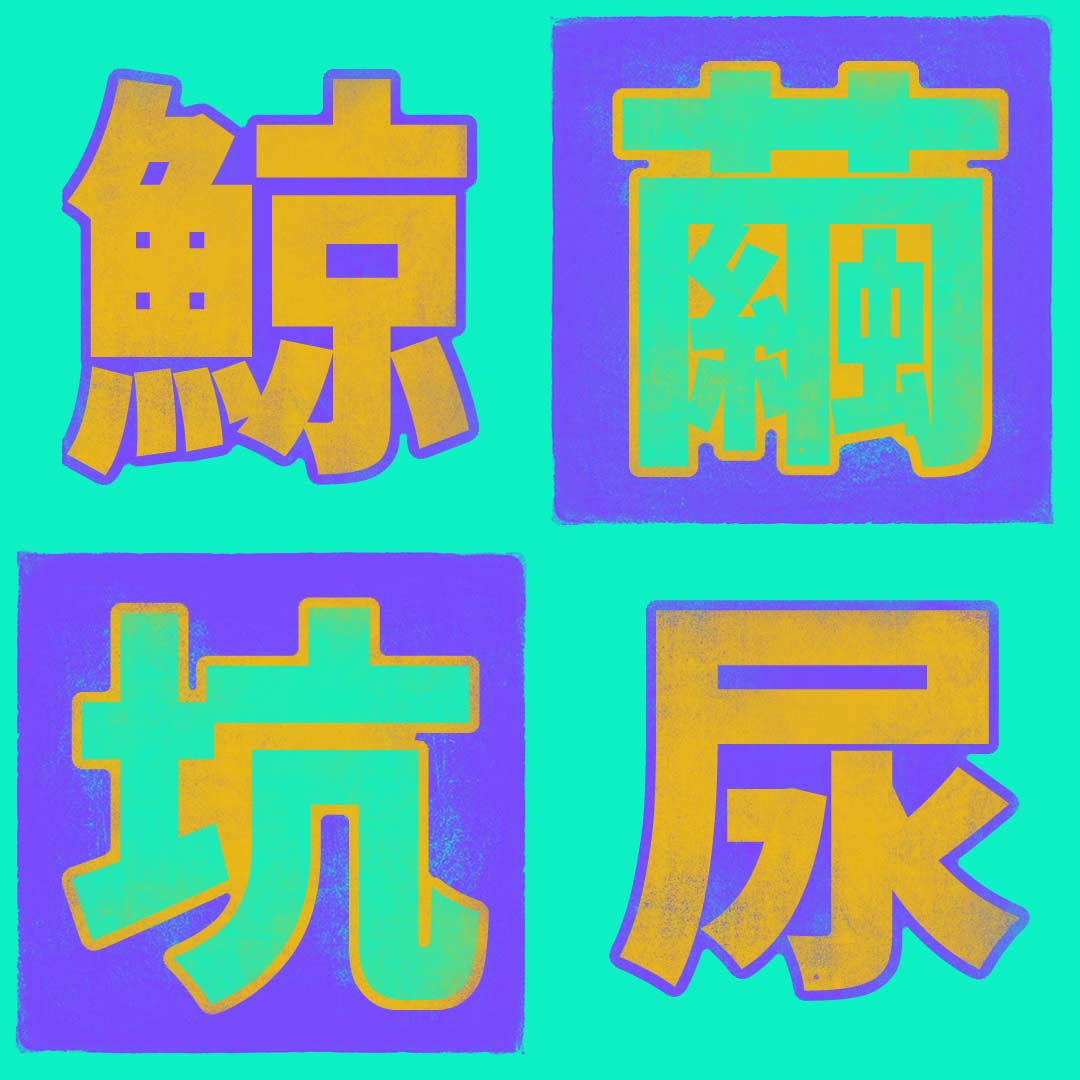
鯨
whale
JOK: 1208
See how whales relate to cows, hippopotami, and boars. Learn anatomical terms from blubber to the blowhole. Discover why sperm whales are “incense whales” in Japanese, see what “the scent of dragon slobber” represents, and learn why 鬚 (beard) appears in important whale words. Find out about Osaka’s whalebone bridge, and learn how the Japanese talk about the whaling controversy.
繭
cocoon
JOK: 1223
The Japanese associate 繭 with silkworms, even though other animals make cocoons. Find out how silkworms develop, producing a mile-long silky thread, and how people turn that filament into usable silk. See why the Japanese have been passionate about silk for millennia, and learn how that enthusiasm ties in with religion, architecture, literature, video games, and cosmetics.
坑
pit
JOK: 1245
Japan is rich in minerals (learn why), and its mines have influenced the nation's history, economy, and activism, from the environmental movement to strikes and unions. Learn what the Yamashita Treasure is, and see how people use "canary in a coal mine." Find out why Ashio Copper Mine is on a par with Minamata and has mattered to Soseki, Haruki Murakami, and Jay Rubin.
尿
urine
JOK: 1675
Find out why a novel and a memoir contain 尿 in their titles. Discover how Edo-era people repurposed excrement for a profit. Learn to say that you want to urinate, and find out how to discuss problems such as frequent urination. Also see why the Japanese are extra-aware of uric acid levels and albumin and why the Japanese word for "albumin" contains characters for "egg white."
Kanshudo is your AI Japanese tutor, and your constant companion on the road to mastery of the Japanese language.
To get started learning Japanese, just follow the study recommendations on your Dashboard.
You can use Quick search (accessible using the icon at the top of every page) to look up any Japanese word, kanji or grammar point, as well as to find anything on Kanshudo quickly.
For an overview, take the tour.
