
104
Bundle 104: Meiji Era: The Staggering Transformation of Japan

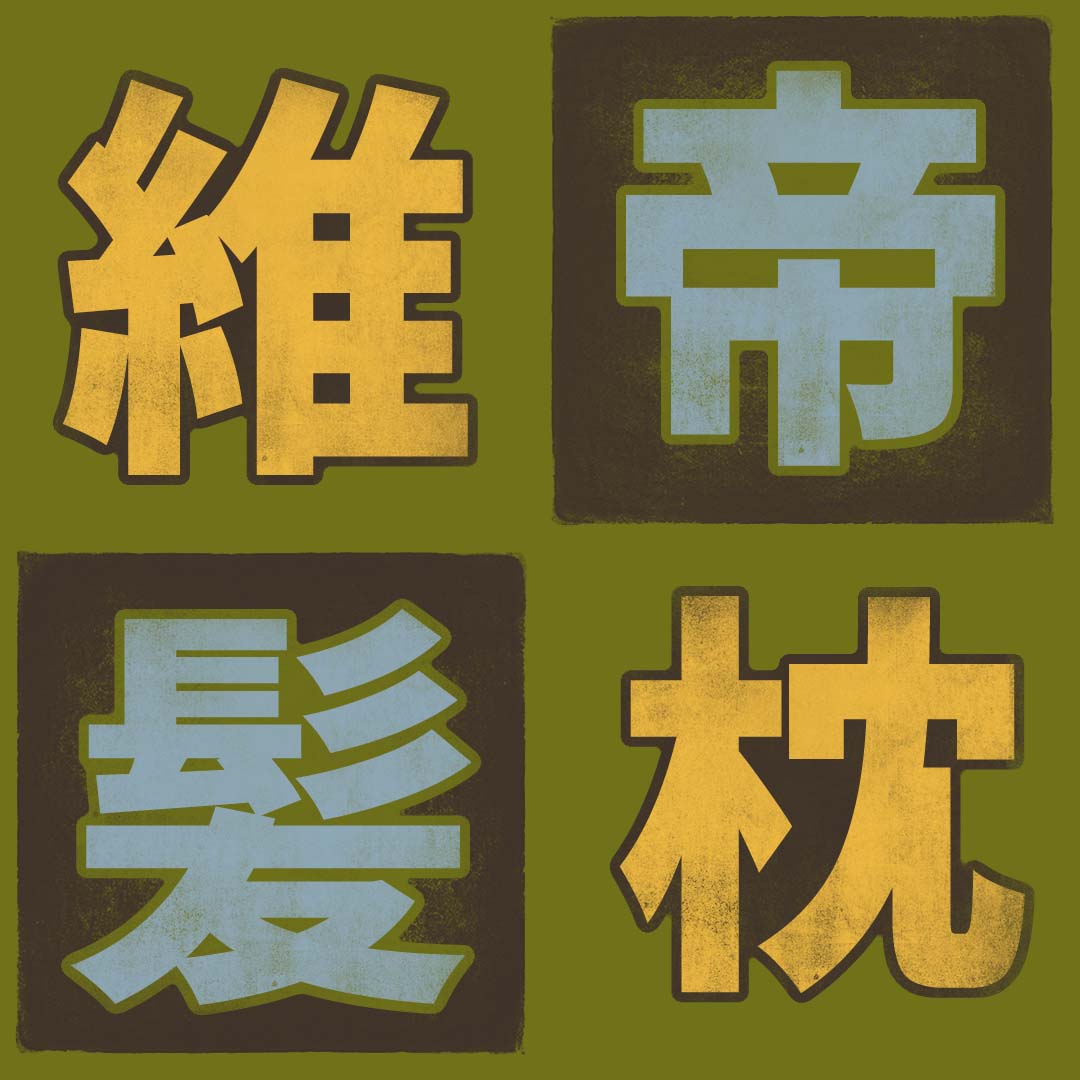
維
fiber
JOK: 1007
By mastering 維, you’ll be able to discuss dietary fiber, nerve fibers, and clothing fiber, as well as the textile industry. As 維 also means “to maintain,” you’ll learn to say, “Maintaining this car is expensive” and “I keep fit by jogging,” plus terms for “peacekeeping.” Our kanji even plays a role in words for “Meiji Restoration” and “Showa Restoration,” so you’ll learn essential, fascinating history.
帝
sovereign
JOK: 1616
Find out why some people call Japan にっぽん, how the mikado kept himself busy centuries ago when he had no power, and how to address the emperor properly if you ever meet! The essay also examines how the old Empire of Japan has influenced the country today, from traces of imperial words in the contemporary language to Japanese feelings about what happened in the past.
髪
hair
JOK: 1706
Learn about historic Japanese hairstyles, including those resembling peaches or ginkgo leaves and one inspired by prostitutes, as well as a boxy pillow women used so as not to muss their hair. See what unexpected roles Edo-era barbershops played. Find out why you should grab the goddess's bangs, where to pray for your hair, and what Japanese men said about Marilyn Monroe.
枕
pillow
JOK: 2115
This wide-ranging essay examines literature over millennia, from ancient China to "The Pillow Book" to Basho and Soseki, plus the connections between pillows, travel, and poetry. The essay covers several types of pillows (e.g., those atop boxes, those you hug, and manly pillows), pillows as cures, pillow-flipping ghosts, figurative pillows (e.g., railroad ties!), a confection, and more.
Kanshudo is your AI Japanese tutor, and your constant companion on the road to mastery of the Japanese language.
To get started learning Japanese, just follow the study recommendations on your Dashboard.
You can use Quick search (accessible using the icon at the top of every page) to look up any Japanese word, kanji or grammar point, as well as to find anything on Kanshudo quickly.
For an overview, take the tour.
