
113
Bundle 113: Meiji Era: Fusion Food

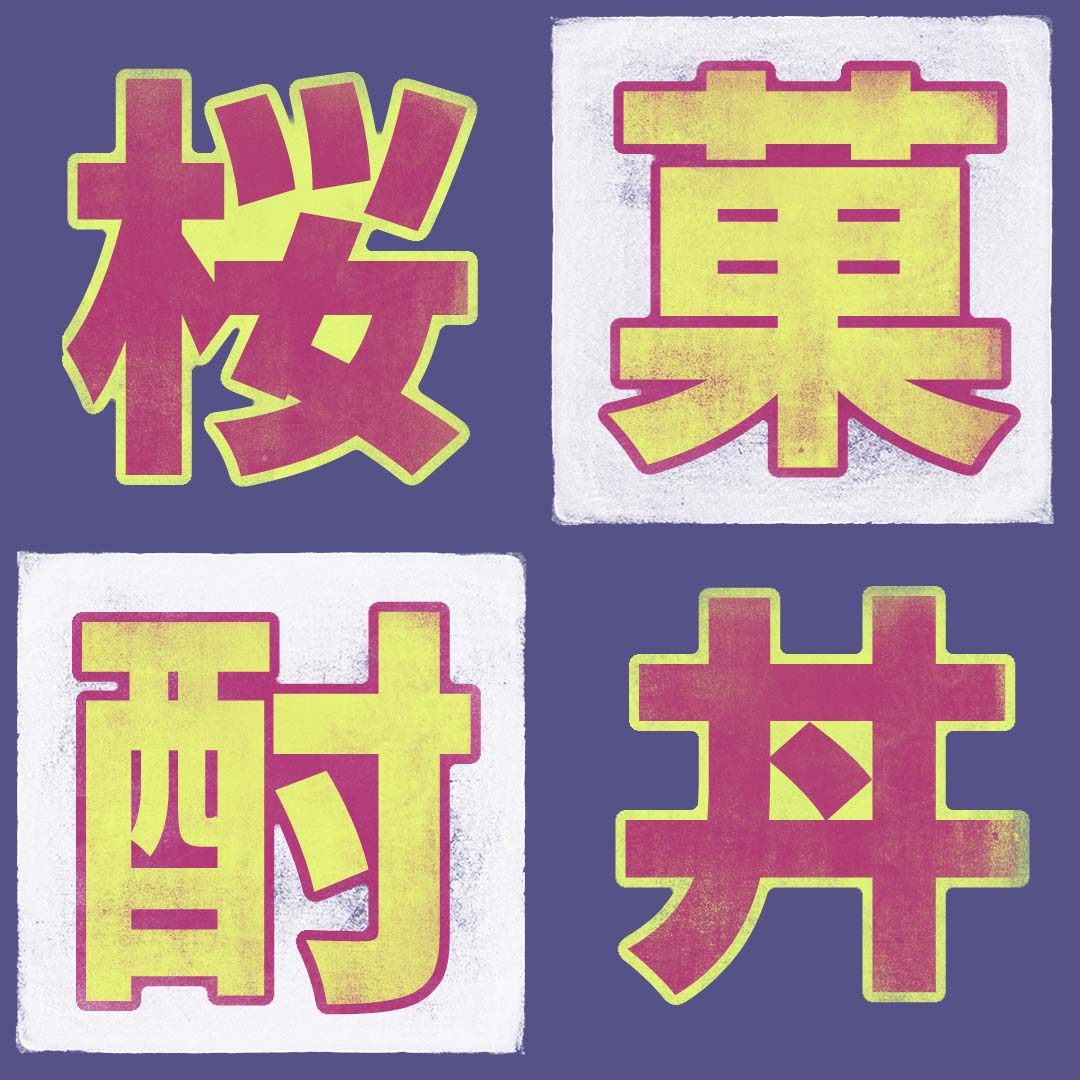
桜
cherry tree
JOK: 1036
Discover what cherry blossoms have meant to the Japanese. See how the blossoms connect to war, learning what "You and I are cherry blossoms that bloomed in the same year" means. Find out ways of consuming the blossoms for real or euphemistically. And learn to say, "The cherry blossoms fluttered down whenever the wind blew" and "The cherry blossoms were at their best."
菓
candy
JOK: 1047
Japan produces desserts from the world over, but its traditional confections offer the most surprises. Find out how a Japanese "sweet" may not be sweet at all and how even a fried vegetable could qualify! Also learn about the connection between 菓 and the tea ceremony, a recurring confection fair in Japan, gift cakes and gift horses, and what gods in Japan like to eat and drink.
酎
sake
JOK: 2066
Learn how to drink shochu, how to make it, and how to classify it. See how a love of shochu made 16th-century carpenters resentful. Discover what shochu has to do with Marlon Brando, Napoleon, sweet potato shortages, and longevity. Learn when tastelessness is a virtue in a drink. And find out how moonshine inspired a term used to denigrate certain literature.
丼
bowl of food
JOK: 2083
Do you primarily associate “donburi” with food? This essay initially punctures that misconception, then plunges into the world of topped rice bowls. Find out what’s in a “viper” rice bowl, a “strangers” rice bowl, and a “civilization” rice bowl. Also see what a “mother-daughter“ rice bowl represents. And learn what a “big serving of the head” means if you order a rice bowl.
Kanshudo is your AI Japanese tutor, and your constant companion on the road to mastery of the Japanese language.
To get started learning Japanese, just follow the study recommendations on your Dashboard.
You can use Quick search (accessible using the icon at the top of every page) to look up any Japanese word, kanji or grammar point, as well as to find anything on Kanshudo quickly.
For an overview, take the tour.
