
77
Bundle 77: Heian-Era Literary Firsts

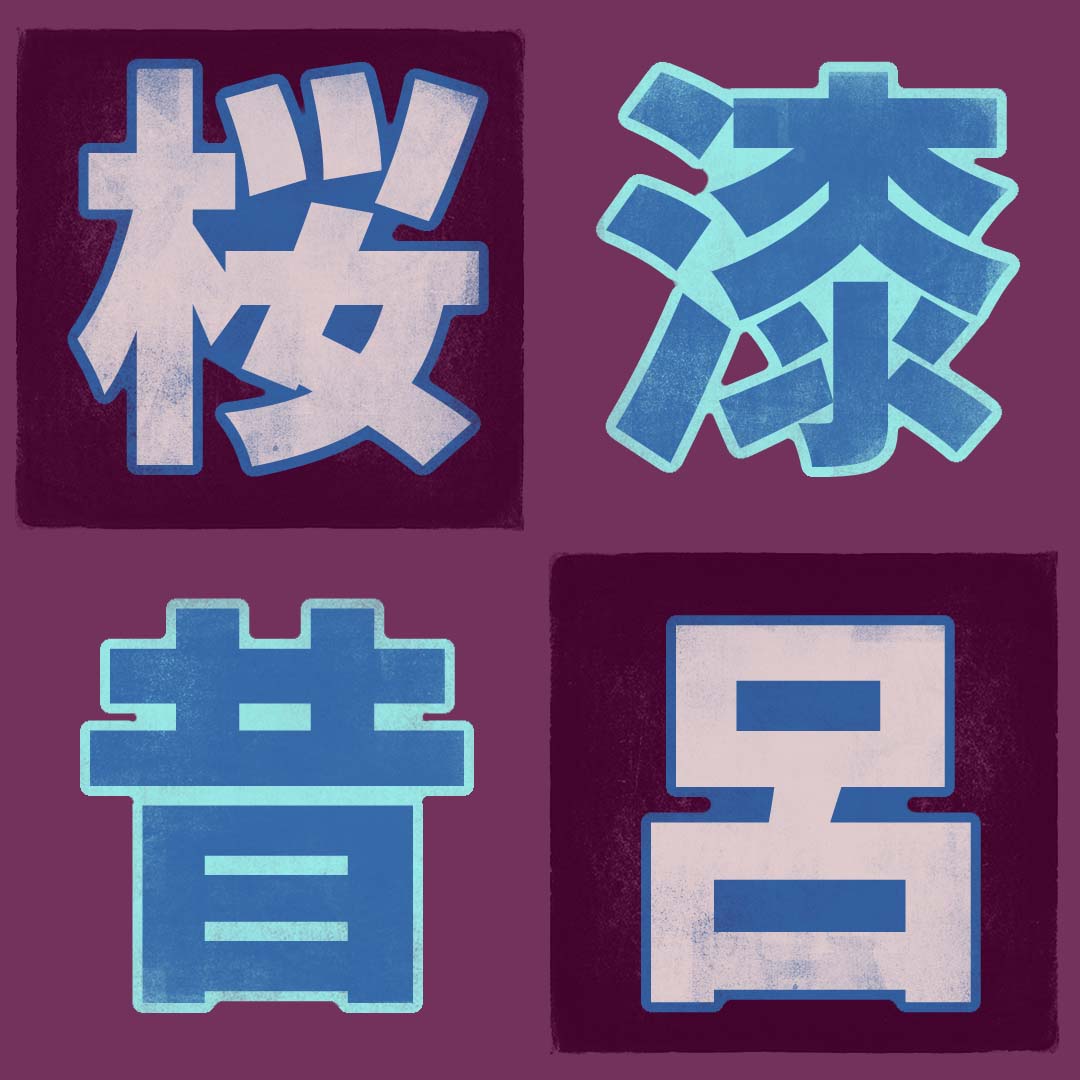
桜
cherry tree
JOK: 1036
Discover what cherry blossoms have meant to the Japanese. See how the blossoms connect to war, learning what "You and I are cherry blossoms that bloomed in the same year" means. Find out ways of consuming the blossoms for real or euphemistically. And learn to say, "The cherry blossoms fluttered down whenever the wind blew" and "The cherry blossoms were at their best."
漆
varnish
JOK: 1334
This richly illustrated essay features photos of rare lacquered works, including a suit of armor with an image of the deity Fudo-Myoo, a cabinet shaped like a monk's backpack, a tiered picnic set, and a large seated Buddha. Find out about Zeshin Shibata's lacquer art and methods of decorating lacquerwork with gold and silver. Also learn about lacquer toxicity and the meaning of "japanning"!
昔
ancient; old
JOK: 1481
Discover how calling something "old-fashioned" in Japanese can be an insult or a compliment. Learn to say that the recent past feels like ancient history. Also learn to say "I used to be a different person," "Hollywood isn't what it used to be," and "That was then and this is now." Find out how although 昔 can currently mean "decade," it once meant a time span as long as 66 years!
呂
spine; ロ sound
JOK: 2136
With this deep dive into the world of Japanese baths, learn about the Indian roots of Japanese bathing practices, the custom of bathing at someone else's house, the way to heat cold bathwater, the purpose of bathtub covers, and figurative descriptions of muggy weather. Also find out about various bathing environments, whether indoor, outdoor, water-free, sandy, or hazardous!
Kanshudo is your AI Japanese tutor, and your constant companion on the road to mastery of the Japanese language.
To get started learning Japanese, just follow the study recommendations on your Dashboard.
You can use Quick search (accessible using the icon at the top of every page) to look up any Japanese word, kanji or grammar point, as well as to find anything on Kanshudo quickly.
For an overview, take the tour.
