
79
Bundle 79: Muromachi Era: A Country Divided

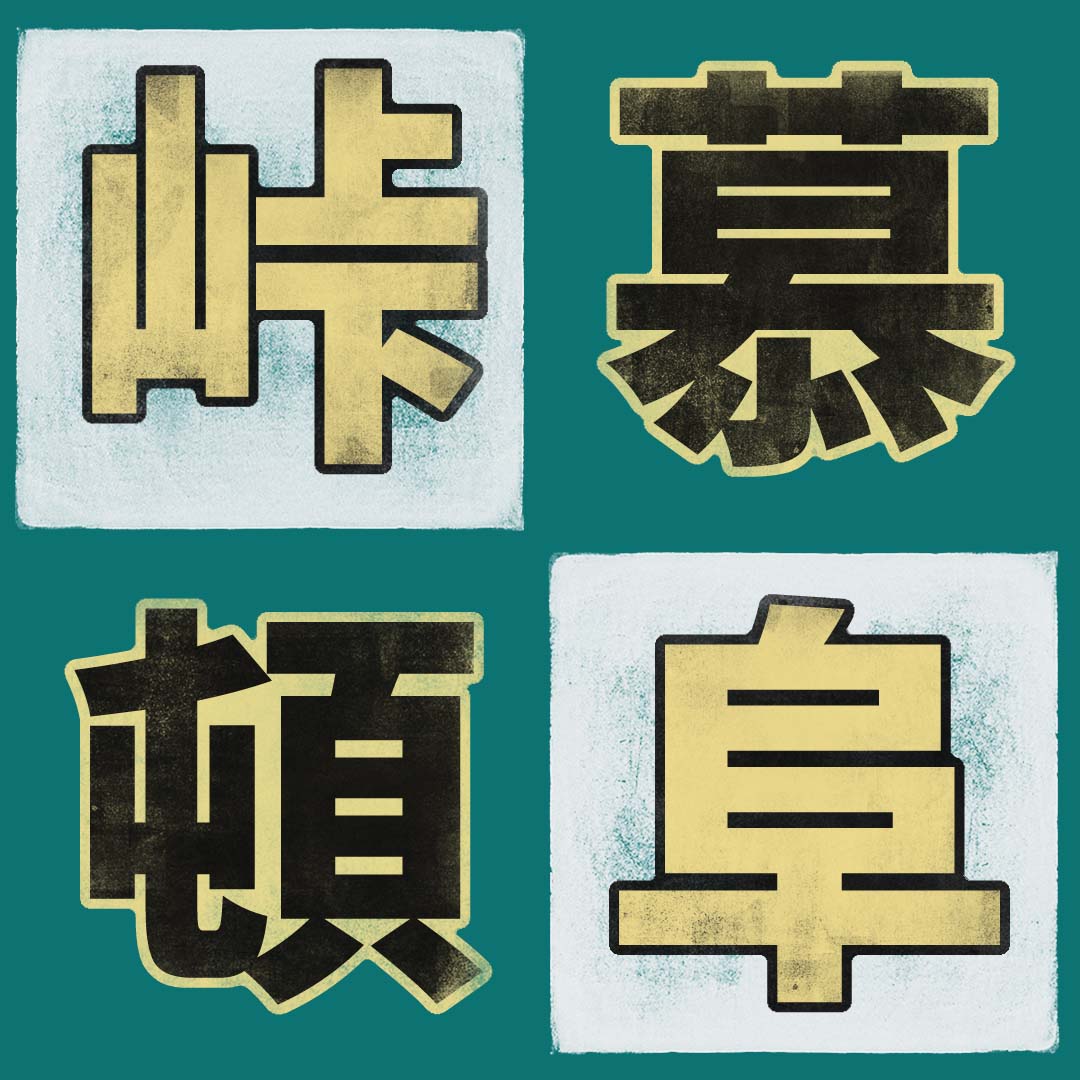
峠
ridge
JOK: 1663
After reading about this famous kokuji, you'll know how to say that you're "over the hump" of a crisis and that a trend has peaked. You'll also understand the significance of mountain passes in Japan, including the military importance they had in the past, the dangers they once posed to travelers, the way they've inspired woodblock artists, and the abundance of hot springs at passes.
慕
pine
JOK: 1788
With 慕 we can express nonromantic love, as in sentences that mean “The girl is deeply attached to her aunt,” “He is longing for his mother,” and “He was pining for his hometown.” But 慕 can also represent romantic adoration, as in “She went to Tokyo to follow the man she adored.” See why one would use 喪う over 失う and what it means to steer a ship up a mountain.
頓
suddenly
JOK: 2081
Learn to say, "I didn't have the slightest idea what they were talking about." That might be your experience if you hear とみに, やがて, ひたと, and ひたすら without having read this essay. It investigates those adverbs, as well as sudden movements and motionlessness (what a huge range!), wit and idiocy (another big range!), Dotonbori in Osaka, setbacks, tidiness, indifference, and much more.
阜
hill
JOK: 2103
Find out why Gifu Prefecture is considered the center of Japan and has been crucial as a crossroads. Learn about Gifu products, from paper umbrellas and lanterns to swords, plus UNESCO heritage sites and a well-preserved town on the Nakasendo. Also read about cormorants that catch and regurgitate fish for the imperial family to eat, a practice that inspired a famous artist.
Kanshudo is your AI Japanese tutor, and your constant companion on the road to mastery of the Japanese language.
To get started learning Japanese, just follow the study recommendations on your Dashboard.
You can use Quick search (accessible using the icon at the top of every page) to look up any Japanese word, kanji or grammar point, as well as to find anything on Kanshudo quickly.
For an overview, take the tour.
