
99
Bundle 99: Edo Era: Samurai Style

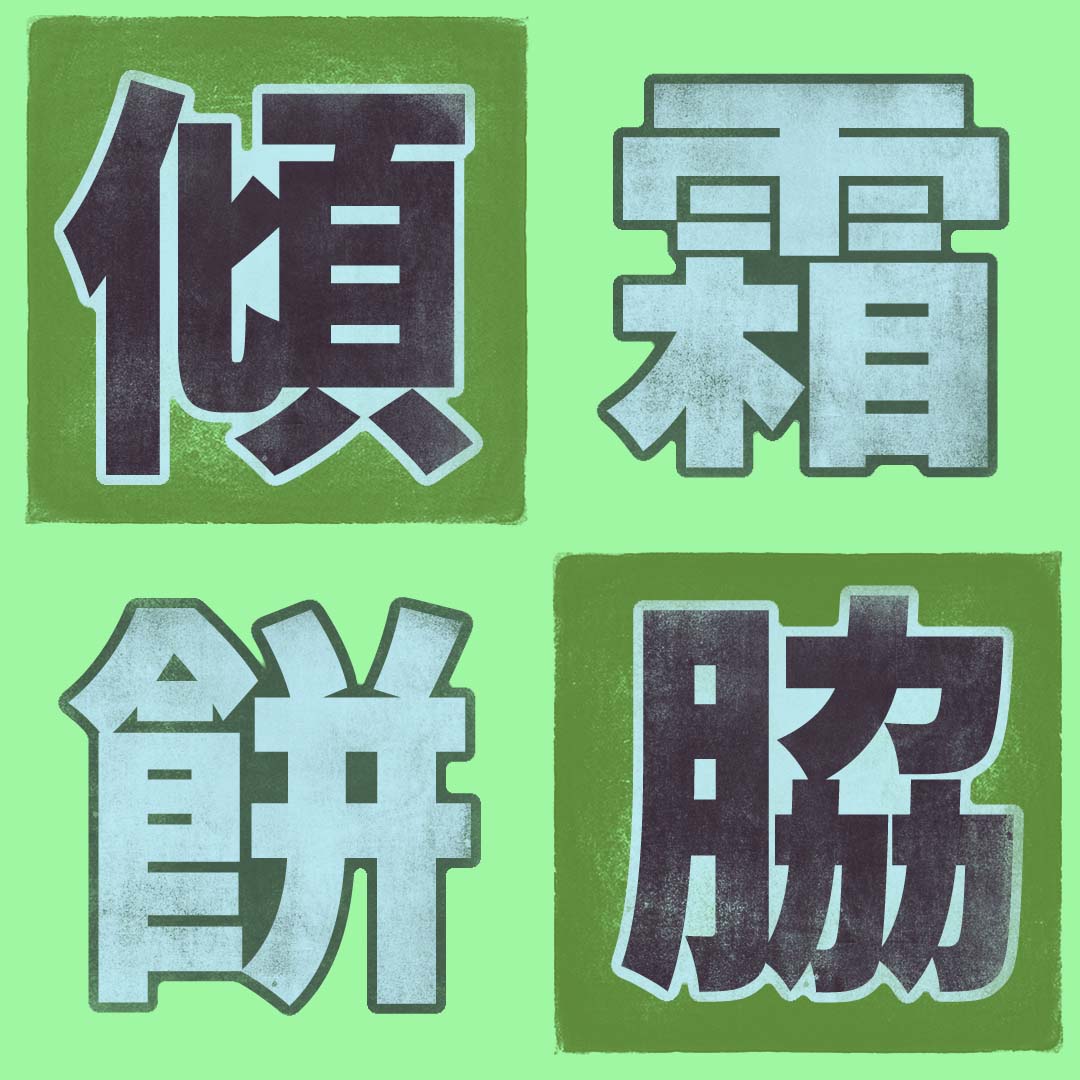
傾
tilt
JOK: 1201
Learn to discuss trends, as in "Students these days tend to use social media." Find out how to refer to slopes, saying, "The land slopes gently toward the river." See what it means figuratively to lean forward or to the right. Learn to talk about concentrating energy, as in, "He put his heart and soul into it." And find out how to tilt your head to the side in curiosity. It's not just for dogs!
霜
frost
JOK: 1529
Find out how to talk about frost, saying things such as, "The ground was covered with frost this morning," "Flowers wither when exposed to frost," and "She watched the first frost turn the leaves to bright yellow and red." Also see how people use 霜 in connection with white hair, marbled beef, expressions of time, swords, hardship, and harshness, as in “His discipline is as harsh as autumn frost.”
餅
mochi
JOK: 2105
Explore the soft, sticky confections known as mochi, discovering their use in religious rituals, their connection to the new year, and their symbolism. Also see how these sweets relate to the following statements: "She fell on her rear," "This is what they call a lucky break," "Jealousy is the enemy of friendship," and "The concept of reform has become pointless."
脇
armpit
JOK: 2112
Using 脇, we can discuss carrying a book under one’s arm, taking one’s eyes off the road while driving, making a beeline for food at a party, and being singlemindedly absorbed in pottery. The meaning “secondary” opens our eyes to sauces, companies, and weapons that serve as “supporting actors,” as well as buildings that play second fiddle to more important structures.
Kanshudo is your AI Japanese tutor, and your constant companion on the road to mastery of the Japanese language.
To get started learning Japanese, just follow the study recommendations on your Dashboard.
You can use Quick search (accessible using the icon at the top of every page) to look up any Japanese word, kanji or grammar point, as well as to find anything on Kanshudo quickly.
For an overview, take the tour.
