Welcome to the Kanshudo blog! Here you can find older blog posts; the most recent ones are
here.
Posted: 2026-03-30,
Tags:
joy-o-kanji
kanji
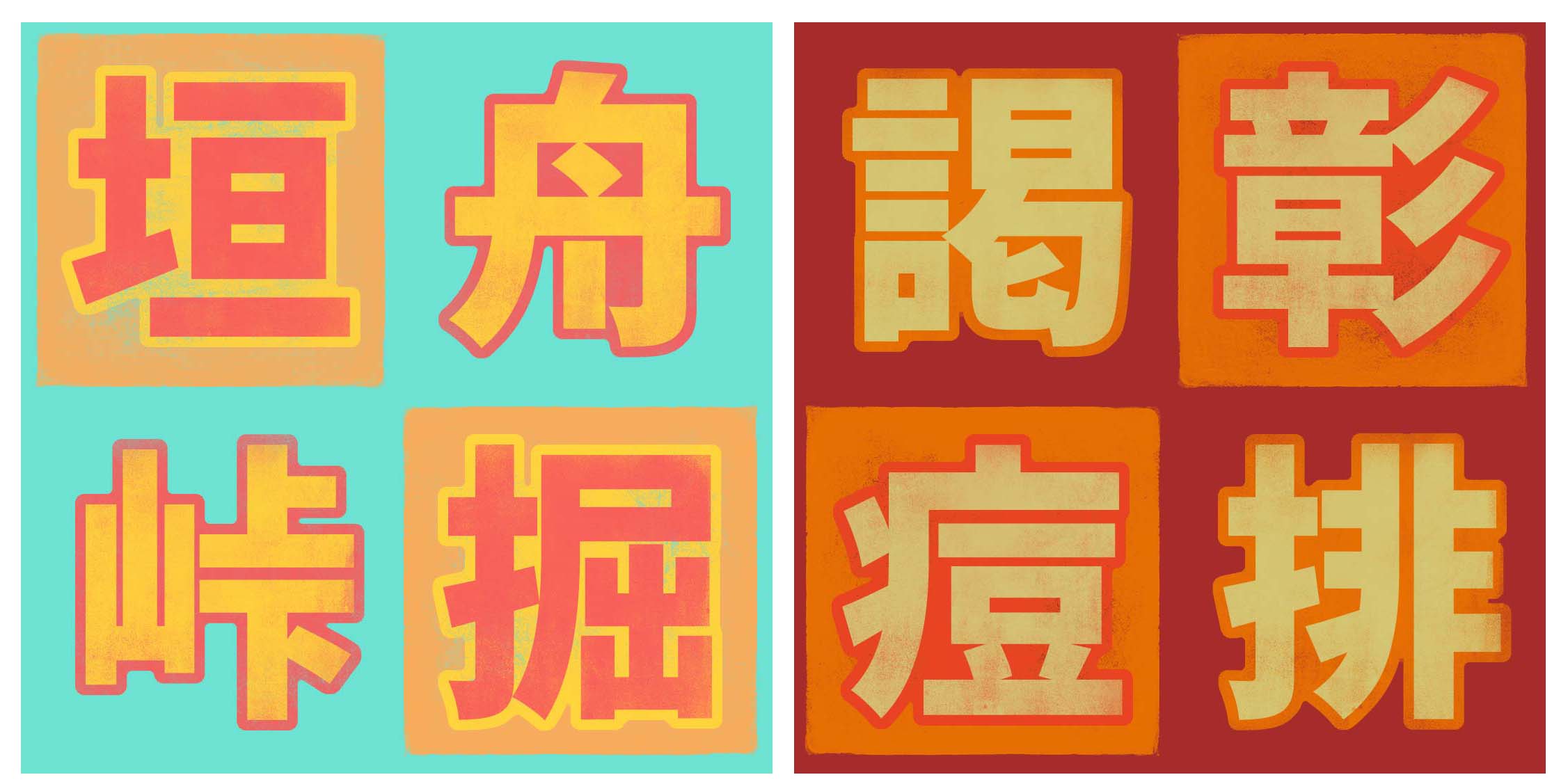
One of our new bundles for March examines the costs of Japan's long isolation and the changes wrought when two Westerners arrived in Japan during the Edo era, prying open the country. Westerners weren't the only ones to take to the water then; the other bundle shows how that period was a golden age for boatbuilding in Japan. The essays explain why and show how this manifested in various ways.
Edo Era: The Japanese Take to the Water
垣 舟 峠 掘
The Edo era (1603–1867) was a golden age for boatbuilding, and the 掘 essay explains why: political stability led to economic stability, and the burgeoning economy prompted a need for canals to transport goods, services, and people. As the 舟 piece shows, the Japanese actually devised boats with many styles and functions, including canal and river taxis. The 峠 article asserts that wealthy people traveled via commercial ships and that companies transported most goods domestically by boat. Indeed, the 垣 essay describes an odd-looking ship used to move items between Edo (the old name for Tokyo) and Osaka.
Edo Era: Prying Open a Closed Country
謁 彰 痘 排
For thousands of years, Japan was isolated and homogeneous, particularly because the Tokugawa shogunate government closed the country from 1639 to 1854. The essays on 排 and 痘 show the costs of that, including the way this policy prolonged the smallpox crisis by delaying the arrival of vaccines in Japan. The essays on 謁 and 彰 describe how both Townsend Harris (the first U.S. consul general to Japan) and Commodore Matthew Perry signed treaties to change Japan's foreign trade policies, thereby opening the country to other cultures and sparking a westernization that delighted some Japanese and dismayed others.
Posted: 2026-03-17,
Tags:
topics
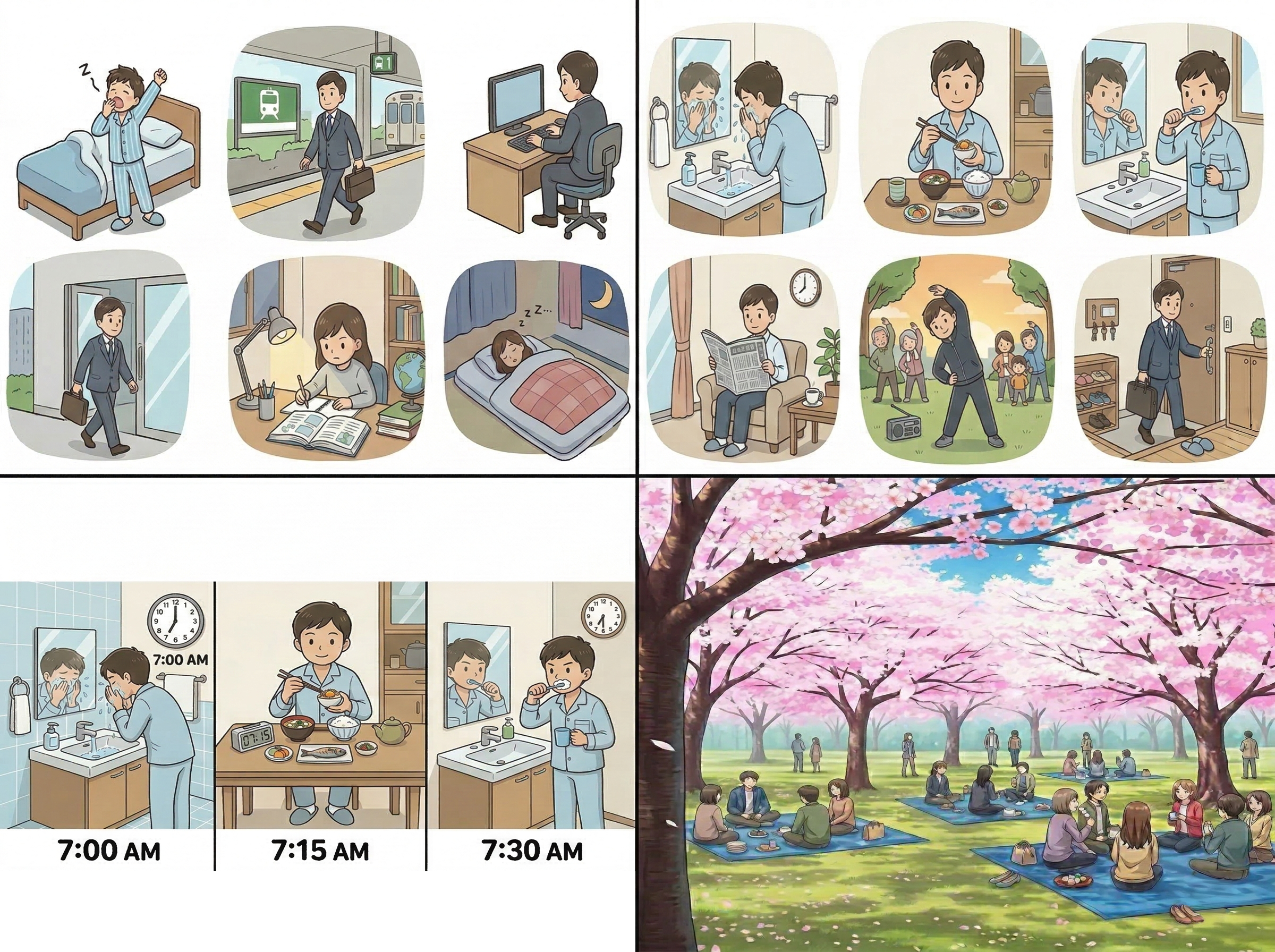
We're delighted to introduce several new beginner and upper beginner
Topic Lessons. Each of these lessons will help you master a specific set of the vocabulary and grammar you need for daily life.
Verbs - daily actions
NEW!
BEGINNER
Learn the vocab and grammar you need to describe common daily activities.
Spring in Japan
NEW!
UPPER BEGINNER
Spring in Japan is one of the most attractive times of the year, and offers some of the most iconic Japanese experiences.
Morning Routines
NEW!
BEGINNER
Everybody has a morning routine, and with this lesson you can learn to describe yours!
Morning Routine and Time
NEW!
BEGINNER
Building on the morning routines lesson, we introduce some time-related expressions, past and negative verb forms, and responses to questions.
┈┈┈┈┈┈┈┈┈┈┈┈┈┈┈┈┈┈┈┈┈┈┈
We're adding Topic Lessons to Kanshudo regularly, as we think they're a great way to learn Japanese appropriate for specific situations. Focusing on material related to a topic often helps your mind make associations faster, which helps you learn the material more effectively. We're adding Topic Lessons suitable for all mastery levels - see the table below for a summary of what we have today. All of Kanshudo's Topic Lessons can be found simply by searching for keywords in Quick Search, for example:
If you'd like to see new Topic Lessons on a topic of interest to you, please
let us know!Here's what we have today:
| Beginner | 18 |
| Upper beginner | 17 |
| Intermediate | 15 |
| Upper intermediate | 15 |
| Advanced | 3 |
Posted: 2026-03-01,
Tags:
joy-o-kanji
kanji
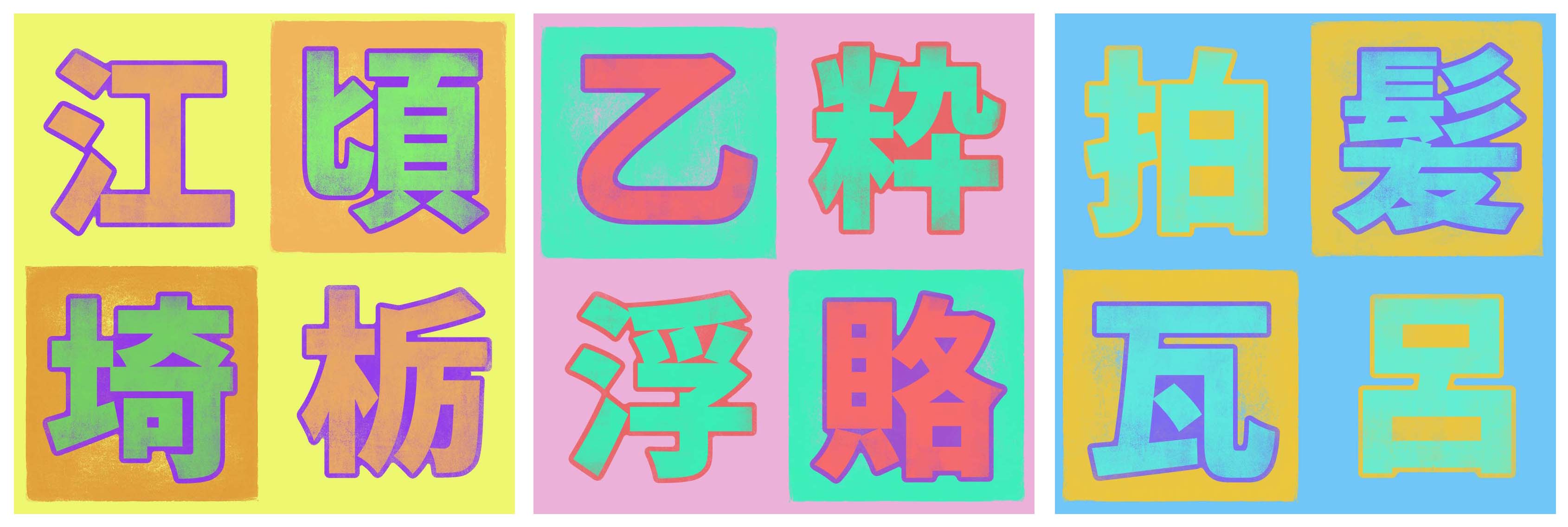
Twelve essays bring us into the Edo era (1603–1867), giving a comprehensive overview of the spirit of the day. From the prevailing hedonism to a new sophisticated aesthetic, from the frequent fires to the rich arts scene, from the barbershops to the bathhouses - these three bundles give a sweeping sense of "Big Edo" (as well as "Little Edo").
Edo-Era Primer
江 頃 埼 栃
This bundle is your gateway to the Edo era (1603–1867). The 江 essay deeply explores the carpe diem mentality, ukiyo-e (artwork), the constant fires, the traits of Edokkos (Edo natives), Edo script, and much more. The 頃 essay portrays the period as the golden age of kabuki, comic poetry, rakugo (stories), sumo, and street performances, also illuminating the term "Big Edo." By contrast, the 埼 essay spotlights "Little Edo" (Kawagoe in Saitama) with its historic buildings and a museum depicting the lives of Edo merchants. Finally, the 栃 essay mentions a cultural theme park that re-creates the Edo era.
Edo Era: Spirit of the Times
乙 粋 浮 賂
In the Edo era (1603–1867), the aesthetically aware Japanese began using 粋, a word representing a delicate sense of beauty. Though 乙 as "stylish" conveys something quite similar, only 粋 drives the phrase 江戸の粋, which could translate as "spirit or sophistication of Edo culture" or "understated stylishness." The 浮 essay showcases woodblock prints (which portrayed daily life, scenes in history, kabuki actors, sumo wrestlers, landscapes, erotica, and more), exploring their connection to people's hedonism. And the 賂 essay presents Edo as a hotbed of bribery. Edo residents may have viewed bribes as virtues, not vices!
Edo Era: People's Daily Lives
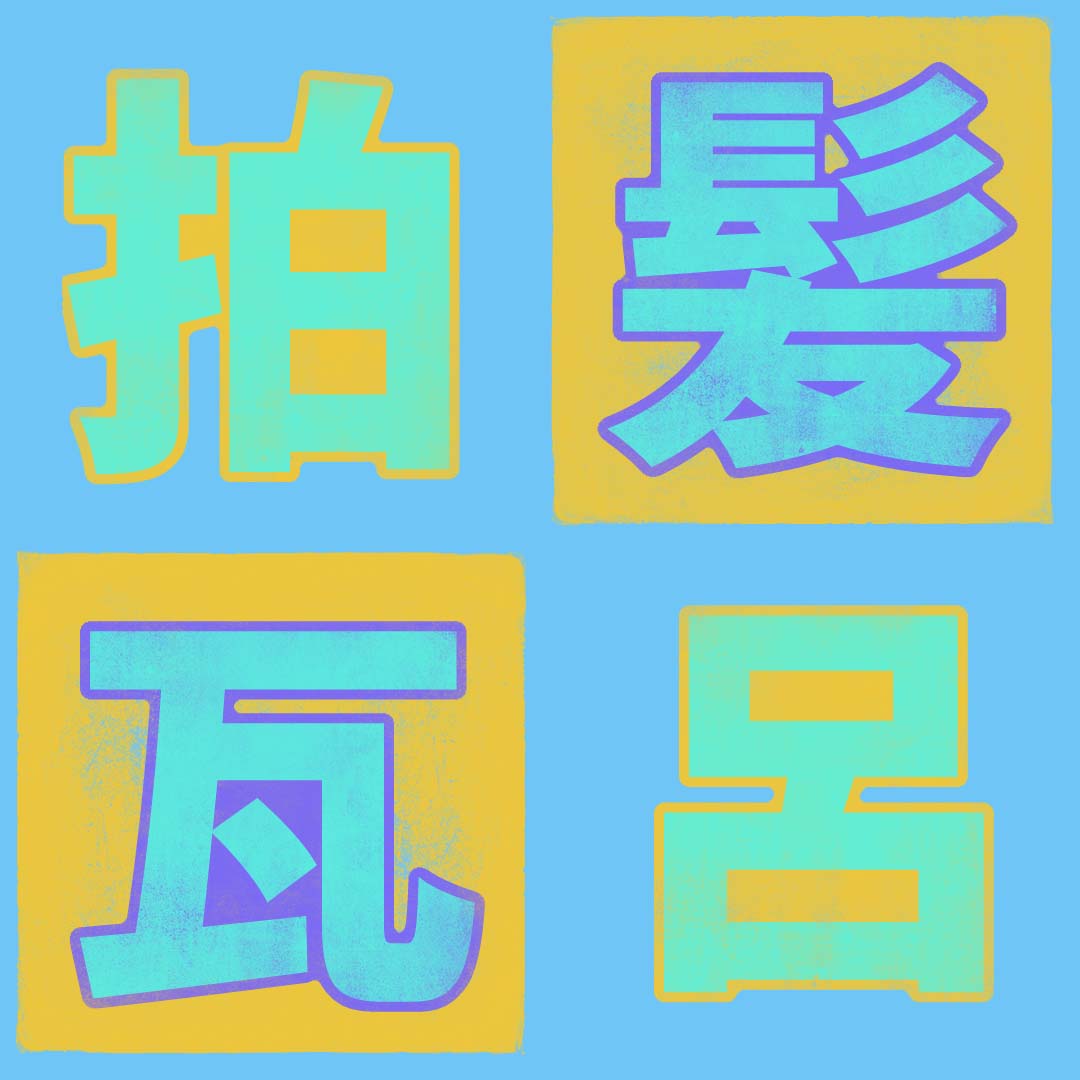
拍 髪 瓦 呂
During the Edo era (1603–1867), most houses were made of wood and paper, topped by thatched roofs and crowded together in cities, so fires frequently erupted, particularly in Edo. The 拍 and 瓦 essays show which measures people took as a result. Citizens patrolled neighborhoods, calling out "Beware of fire!" And Edo residents embraced ceramic roof tiles, complying with new government regulations. The other two essays show where regular folks spent their days—at barbershops and public bathhouses—both doubling as gathering places. In Edo, bathhouses also became closely associated with prostitution.
Posted: 2026-01-27,
Tags:
joy-o-kanji
kanji
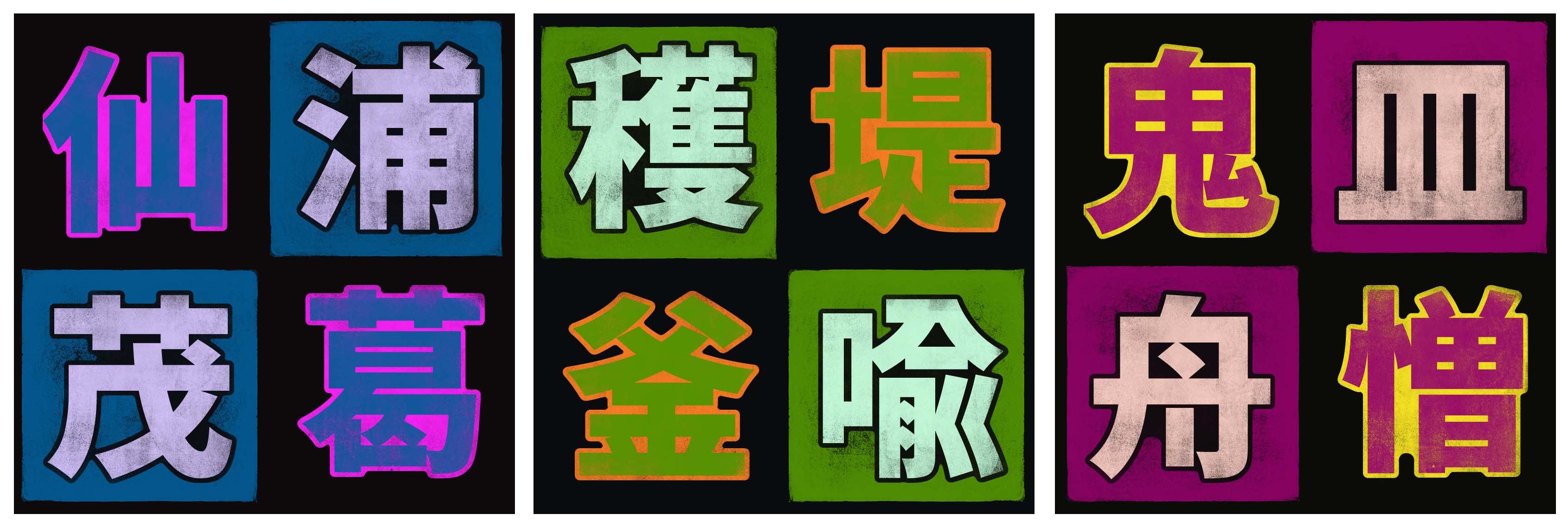
The essays in our first set of thematic kanji bundles for 2026 present Japanese folktales with three overarching themes: helping animals in distress (and seeing how they respond), grappling with anxiety about starvation (and taking action accordingly), and embarking on a quest for justice (often resorting to violence). If folktales reflect the concerns of the eras in which they emerged, what do these stories really show? One essay provides a framework for understanding Japanese folktales in general.
Rescuing Distressed Animals in Folktales
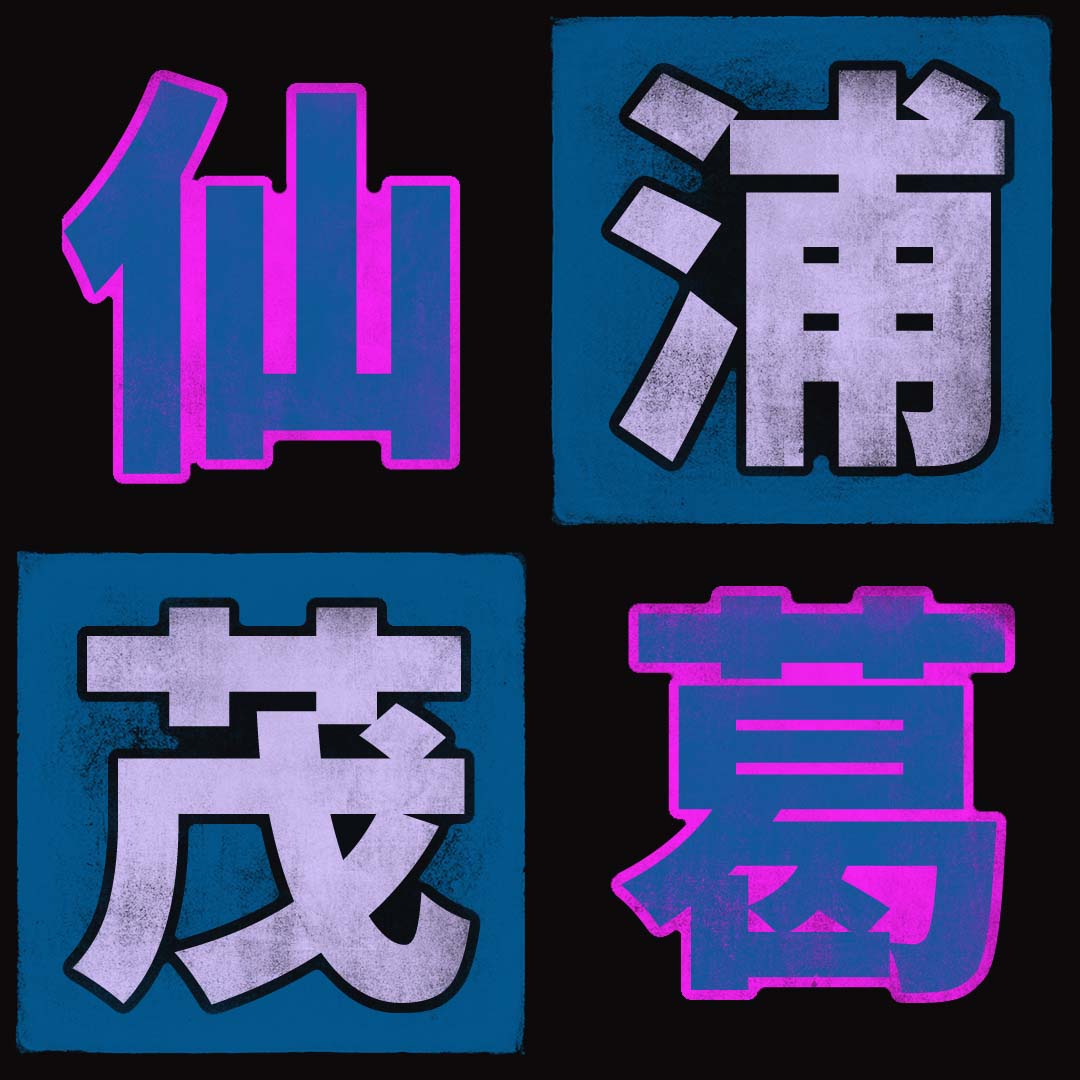
仙 浦 茂 葛
Helping a distressed animal should reap big karma points, and most folktales in this bundle reflect that view—but not all do. One man obeys an entreaty to treat animals better and finds himself handsomely rewarded. In "The Magic Tea Kettle," told here bilingually, a tanuki goes to great lengths to reward a good Samaritan with wealth. Another folktale has a similar ending, but despite a woodcutter's kindness to an injured sparrow, the old man is still tested. A final story stands as an anomaly; Taro Urashima aids a turtle and ends up punished with sudden-onset old age.
Folktales and Anxiety About Starvation
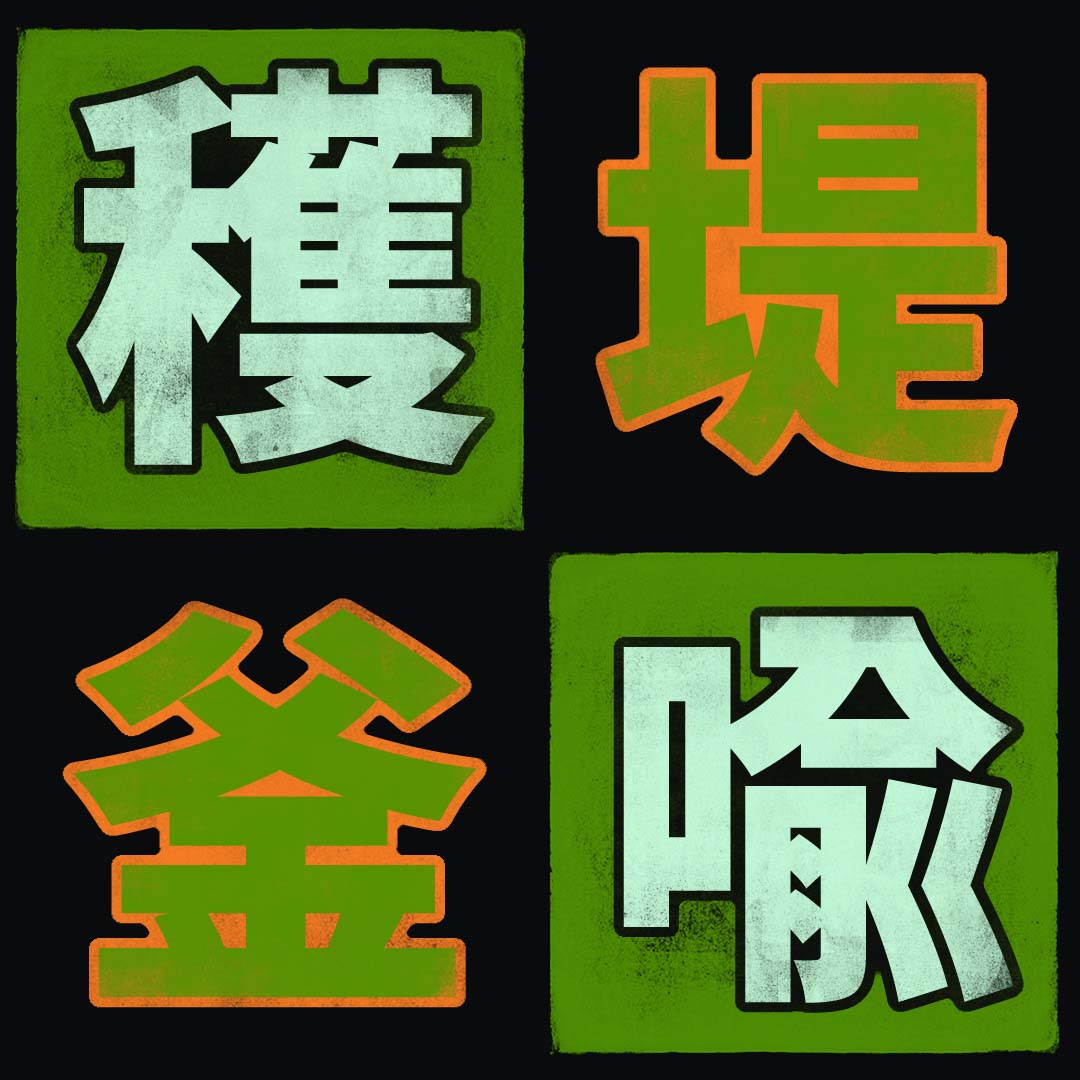
穫 堤 釜 喩
Anxiety about food scarcity bedeviled Japan for centuries. Accordingly, some folktales reflect deep concerns about starvation. In "The Stone Potatoes" (told bilingually here), someone disguised as a filthy priest begs a woman for potatoes, only for her to hoard her stash. "A Human Sacrifice in Kamashita" (presented bilingually here) depicts the gravity of having floods repeatedly destroy crops. Another essay refers to the same folktale, showing why the name "Kamashita" must have terrified people. A final essay in this collection argues that Japanese folktales often convey philosophy rather than lessons, which sheds light on the two stories.
Folktales and a Longing for Justice
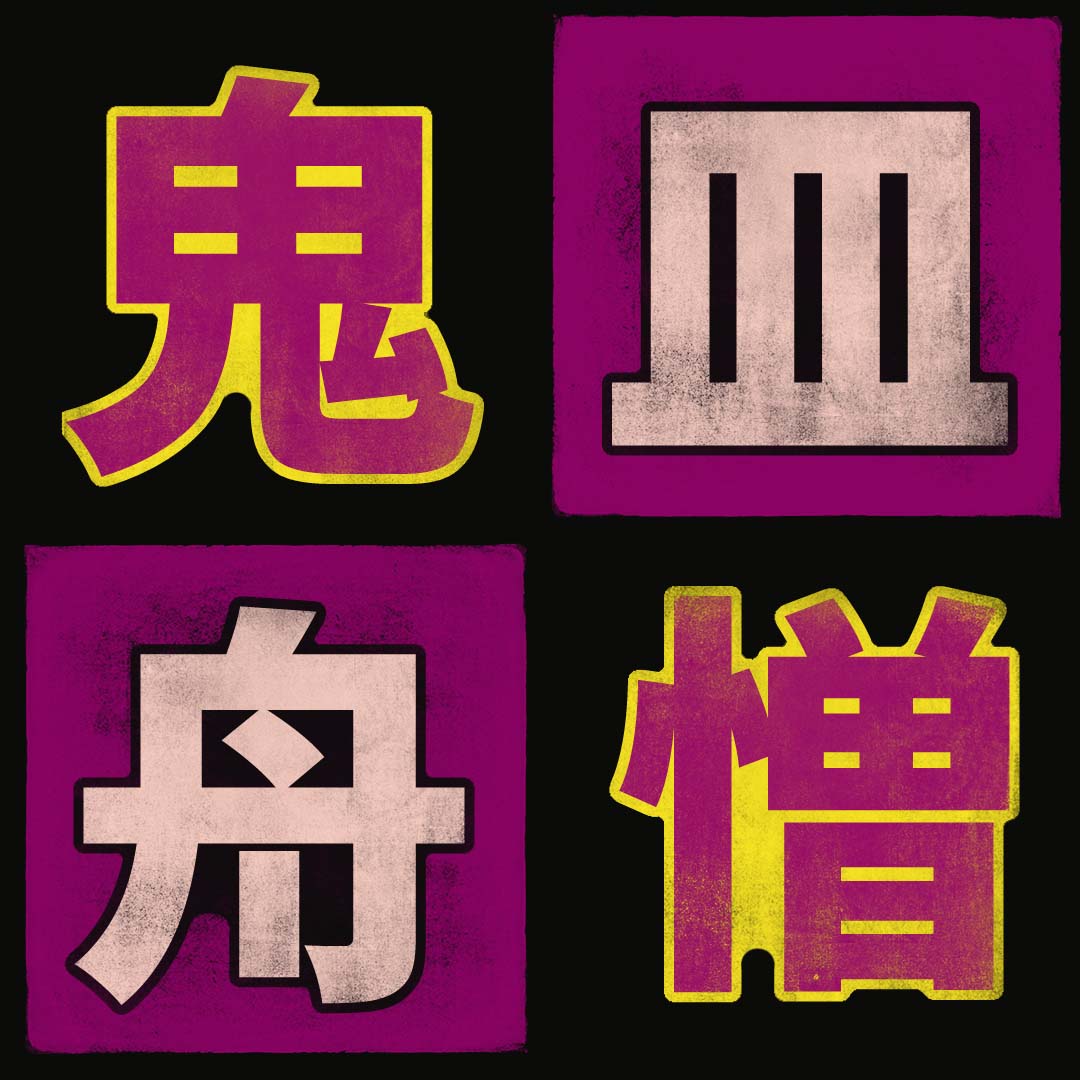
鬼 皿 舟 憎
As this bundle shows, folktales about vengeance satisfy a human craving for justice. One depicts a spurned woman, Kiyohime, whose love turns to hatred and then to homicide. Another reflects a power imbalance between a would-be rapist and his female servant, Okiku. If one sees her as having the final say, that's salve for anyone who has felt powerless. In "Kachikachiyama," a rabbit punishes a wicked tanuki, fulfilling a universal longing for good to defeat evil. The story of Momotaro's battle may reflect a desire for justice on an international scale; the folktale could symbolize struggles between Japan and Korea.
Posted: 2025-12-06,
Tags:
sales
offers

It's the time of year to celebrate, and here's something worth celebrating: get 50% off a year of Kanshudo Pro in our holiday sale! Let Kanshudo help you improve your Japanese by leaps and bounds in 2026.
Kanshudo is the most comprehensive and effective online platform for learning Japanese. Kanshudo will take you from absolute beginner all the way to seasoned expert, with tools and material that support every learning style. Join over 260,000 Japanese learners and take advantage of:
Take advantage of our newest feature, the
JLPT Resource Center. One of the largest additions to Kanshudo, the JLPT Center enables you to take timed JLPT tests, practice all of the various question types individually, and study curated lists of content for the JLPT. Supercharge your ability to study for the JLPT with Kanshudo!
2025 has been a huge year for Kanshudo with many additions to the system:
Kanshudo will help you master kanji, hiragana, and katakana, along with Japanese grammar and vocabulary, as fast, effectively, and enjoyably as possible! Kanshudo is used by over 260,000 Japanese learners, with
proven results. Act now and get Pro access for less than 25 cents per day! Valid for any annual plan (Kanshudo, Kanshudo + Joy o' Kanji, Kanshudo + AI) for users without a current Pro plan.
Posted: 2025-12-03,
Tags:
jlpt

The JLPT Resource Center will supercharge your preparation for the JLPT - the Japanese Language Proficiency Test. It brings the following key features:
- Timed tests: take actual past JLPT tests, under test conditions, and see what you got wrong and what you got right
- Question practice: practice individual question types using the exact style of question used in the actual tests administered twice annually
- Curated content lists: view lists of kanji, words and grammar used in the JLPT, and view a summary of your current knowledge
- Flashcards: automatically generate flashcards for all JLPT material, and study them using Kanshudo's powerful and flexible flashcards system
- View progress: see visual feedback of your knowledge of JLPT material, and get an overall assessment of your progress towards the next exam!
The JLPT Resource Center can be accessed in several ways - you'll see a new icon,
, in the main menu bar. Additionally, you can find a link in the STUDY menu. As with all Kanshudo features, you can also just search - just type 'jlpt' into
Quick Search.
This has been a huge project for Kanshudo - the N5 question practice system alone involves thousands of pieces of content, and fourteen new exercise types matching the style of JLPT questions. We believe this will make studying for the JLPT dramatically easier and more effective. To the best of our knowledge, there is no better way to study for the JLPT exam.
Currently all features for N5 study are live, and timed tests are available for N5 through N2. We're going to be introducing more N5 content, as well as remaining content and tests for additional N levels, steadily in coming weeks and months.
Posted: 2025-11-26,
Tags:
joy-o-kanji
kanji
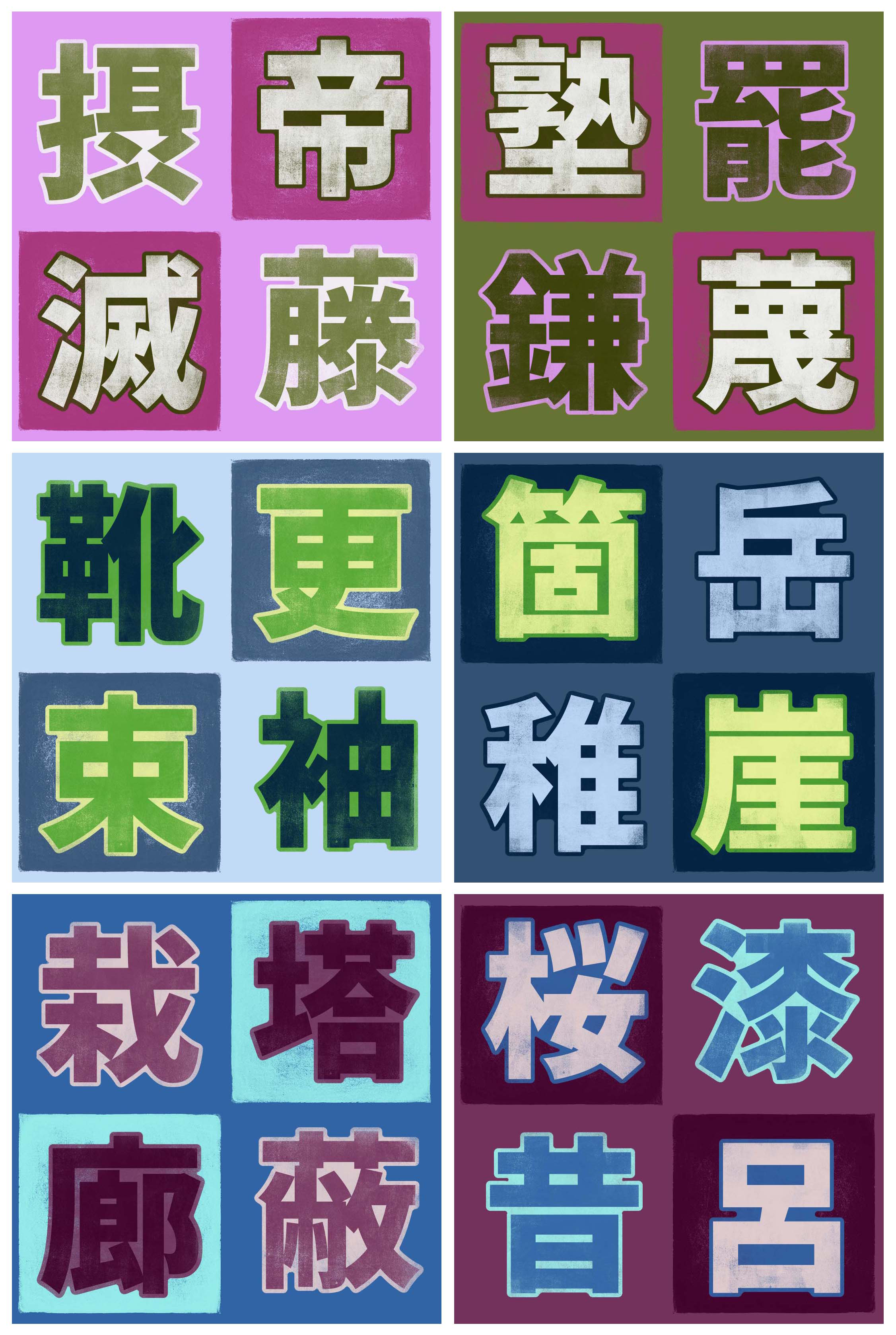
Twenty-four essays collectively bring the Heian era (794–1185) to life, throwing the spotlight on shifting political power and on inequity so blatant that it recalls the French Revolution. The bundles also examine significant changes in the religious realm (for better and for worse), as well as advances in clothing, architecture, and literature.
Heian-Era Clans in Control
摂 帝 滅 藤
As these essays show, political power shifted dramatically during the Heian period (794–1185). Emperors became figureheads while aristocrats grabbed true power. Starting in the mid-9th century, the Fujiwara clan became regents and advisers, excluding other clans from that scene. In the tussle for power, entire families could be eliminated; in one massive sea battle, the Minamoto clan exterminated the Taira family. By the late 10th century, Fujiwara power reached its zenith. For instance, Japanese artists developed a national style from 894 to 1185, and art historians call that the Fujiwara period, simply because of who was in charge.
Heian-Era Nobles Living Their Best Lives
塾 罷 鎌 蔑
In the Heian era (794–1185), aristocrats flourished in Japan and relished their newfound power. Only they could afford private lessons (in poetry). Being terrible snobs, they scornfully demanded that the samurai compose poems impromptu; viewing the samurai as savages, the nobles were setting the samurai up to fail. During those times of gross power imbalances, this term mattered: 罷る (to go somewhere by order of a superior). Of course, the nobles were the masters. But nothing lasts forever; by the mid-12th century, control of Japan shifted away from aristocrats into the hands of the samurai. Oops!
Strangling Sartorial Rules in the Heian Era
靴 更 束 袖
Your clothes may feel binding, but as these essays show, nothing compares to the strangling sartorial restrictions of the Heian era (794–1185). The elites changed clothes whenever they pooped! They also wore at least six types of clothing simultaneously, putting them on in a fixed order. For instance, aristocrats had to wear short-sleeved kimonos under other layers. Fortunately, Heian shoe innovations made life better for everyone. The Japanese devised three types of sandals. The nobility began wearing shoes more often, and common people made their own footwear.
Heian Piety and Problems
箇 岳 稚 崖
Religion greatly influenced the Heian era (794–1185), as this bundle shows. Pious types took pilgrimages and carved massive Buddha figures onto rock faces. In one Kyushu city alone, 59 such statues have been deemed national treasures. Those years also gave rise to Shugendo, a mixture of mountain worship, esoteric Buddhism, and Taoism. But not all developments were positive. At remote temples, some monks sodomized boys who were training to be priests, causing countless Japanese to pull away from temples. Many also felt turned off by monks' arrogance and by temples' tax-exempt status. Consequently, several new sects of Buddhism emerged.
Heian Architecture, Both Grand and Practical
栽 塔 廊 蔽
The Heian era (794–1185) left its mark on architecture. Temple halls and towers are the representative structures of the period, which is when the Japanese likely invented pagodas (塔) of two and five stories. Traditional Heian-era palatial-style architecture includes a roofed corridor (廊) connecting two buildings. As the 栽 essay shows, one style of palace combined residential buildings, gardens, and connecting corridors. After all this grandeur, the 蔽 essay brings us down to earth by mentioning features of a regular Japanese house, including partitioning screens, immovable walls, fusuma (sliding doors), and shoji (sliding windows).
Heian-Era Literary Firsts
桜 漆 昔 呂
The Heian period (794–1185) produced literary firsts, as this bundle shows. Major publications included "The Tale of Genji," (54 volumes!), "The Tales of Ise" (collected poems and prose), "The Tale of the Heike" (an epic), and "Konjaku Monogatarishu" (more than a thousand tales from India, China, and Japan, including Japanese folklore). The famous いろは poem emerged, using all basic archaic syllables only once. And whereas people used to wax poetic about ume (Japanese apricots), Heian poetry instead reflected a sudden appreciation of cherry blossoms, with 花 (flower) newly meaning "cherry blossom" in verse.
Posted: 2025-10-29,
Tags:
joy-o-kanji
kanji

Four essays collectively show how Japanese culture began to flourish in the Asuka and Nara eras, and another bundle demonstrates the unthinkable power that governments wielded over citizens at that time.
Asuka-Nara Flourishing of Culture
琴 墨 隆 奈
As these essays show, Japanese culture flourished in the Asuka and Nara periods (550–794). Asuka-era architectural styles impress even today. In that period, the Japanese brought stringed instruments back from China. Around the same time, the Japanese began producing copious inksticks, leading to calligraphy, ink drawing, and ink painting (and soon to dyeing clothes). Simultaneously, the literary world made great gains; the first nonfiction (two history chronicles) and a poetry anthology came out—all still significant works. The earliest Japanese gardens also emerged in the late Nara period.
Ruling with an Iron Fist in the 8th Century
墾 宰 紫 庸
Eighth-century Japanese governments exercised astounding power. The authorities established colors that each rank of bureaucrats could wear and permitted only the highest-ranking ones to dress in dark purple (紫). The imperial court cultivated (墾) certain fields using public labor, permitting regular people to hold private land permanently only in 743. A rigorous legal and political framework known as the ritsuryo system forced people to do 10 days of unpaid labor if they couldn't pay taxes. And the Dazaifu, an agency governing all of Kyushu, wielded such might that it had its own diplomatic relations with China.
Posted: 2025-09-29,
Tags:
joy-o-kanji
kanji
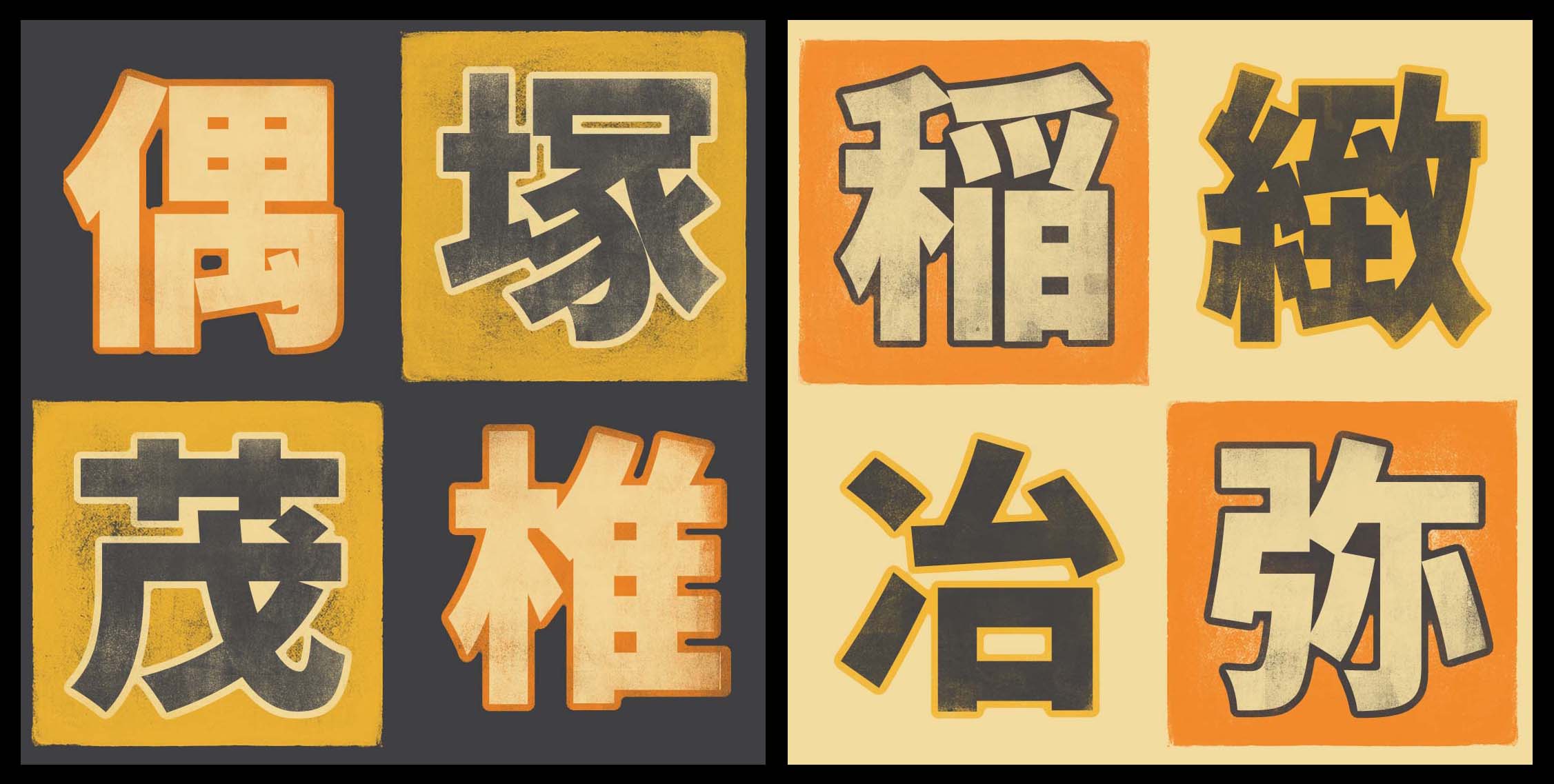
Though the long-ago Jomon and Yayoi eras (c. 14,000 BCE–300 CE) could be shrouded in mystery, scholars have deduced an astonishing amount about how people lived and which needs drove them. Two new bundles show what archaeological digs have revealed and what experts know and still debate about the rival ethnic groups (the Jomon and Yayoi) who are the ancestors of the modern Japanese people.
Jomon-Yayoi Treasures from Trash
偶 塚 茂 椎
Thank archaeologists for demystifying the Jomon and Yayoi eras (c. 14,000 BCE–300 CE). By examining shell mounds—glorified trash heaps—these scholars have determined what ancient people ate, owned, and valued. Bones from a Tokyo shell mound revealed that Jomon cannibalism existed. Moreover, archaeologists have found a crucial Jomon food source (Castanopsis nuts), unearthed bronze Yayoi-era vessels and Yayoi-era defensive structures, and uncovered about 15,000 goggle-eyed figurines (c. 3000 BCE–400 CE). Many look pregnant, so people likely associated them with fertility, also possibly believing that one could transfer illnesses into them and out of humans.
What Drove the Jomon-Yayoi People
稲 緻 冶 弥
Researchers studying ancient Japan have little material—mainly ruins of buildings, earthenware, and iron tools. Nevertheless, as these essays show, scholars understand much about what drove the Jomon and Yayoi (ethnic groups who fought and killed each other). For instance, people hungered for metal to craft weapons, vessels, coins, and needles (to make clothes), and this quest sparked battles. Still, many aspects of the Jomon and Yayoi eras (c. 14,000 BCE–300 CE) remain contested; experts disagree about the origins of the Yayoi people and of wet rice cultivation in Japan, as well as the existence of Stonehenge-like Jomon-era monuments.
Posted: 2025-08-31,
Tags:
joy-o-kanji
kanji
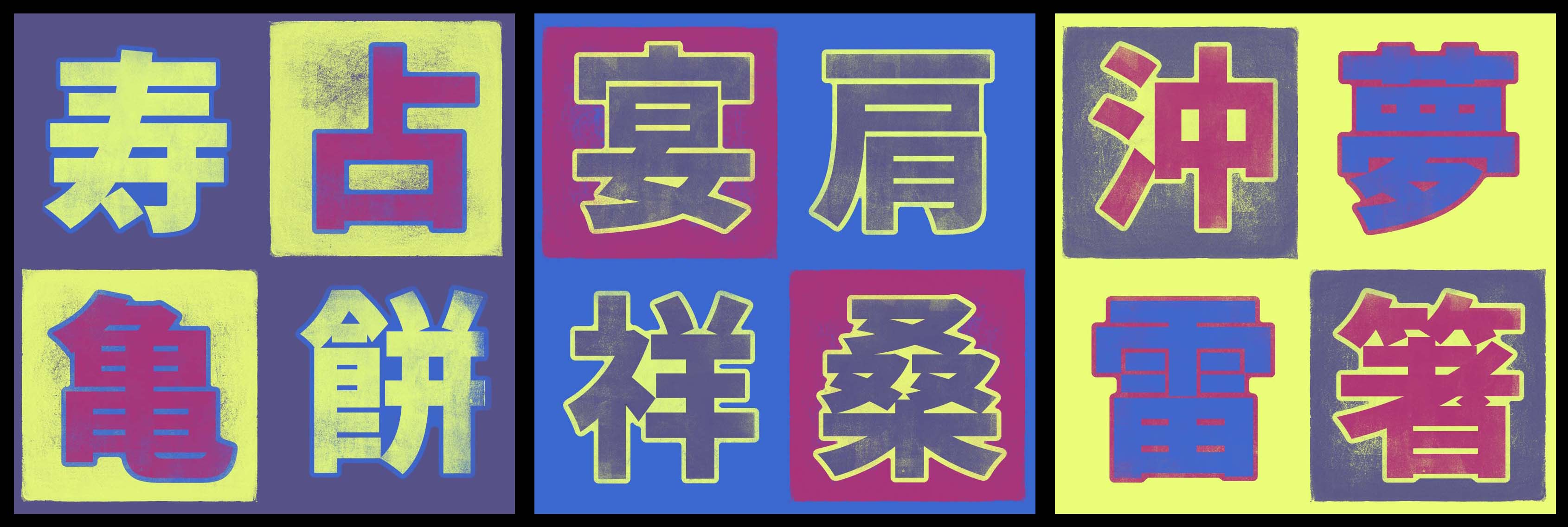
Superstition governs far more in Japan than outsiders might realize. Three new bundles show how the Japanese try to usher in luck and avoid problems. The collection also explains the beliefs driving this behavior.
Lots of Luck
寿 占 亀 餅
The collection reveals copious ways in which the Japanese try to usher in luck, wealth, and good harvests. They offer sacred mochi to the gods. Flattening it brings longevity, eating it on a kid's first birthday helps the child grow, and coloring mochi red repels evil. People rely on fortune telling, using everything from palms, blood types, and facial features to birth dates, dreams, and even the shape of lingering snow. Folks treat certain birthdays as auspicious, thanks to visual wordplay with kanji. Finally, because turtles symbolize luck and longevity, people use 亀 (turtle) in shop names.
Staving Off Doom
宴 肩 祥 桑
These essays show how the Japanese spot omens in small details. If a sandal thong breaks, that portends doom, such as death or an accident. When a product logo slopes to the right, the item alarmingly symbolizes economic decline. To stave off misfortune, people take measures: After lightning strikes, they chant to ward off bad luck. When a party must end, a host announces this euphemistically, avoiding words that suggest separation or divorce. People associate the 水 of 水曜日 (Wednesday) with a term for "to be canceled," so realtors typically take Wednesdays off to avoid having contracts canceled.
Of Gods and Monsters
沖 夢 雷 箸
As this bundle shows, ingrained religious and spiritual beliefs drive Japanese superstitions. Prohibitions around chopstick usage govern table manners (e.g., believing that crossing chopsticks symbolizes death). Gods and people are thought to eat together, and the ends of chopsticks are associated with the divine. Thunder might be a divine scolding, and lightning prompts people to use protective amulets. After nightmares, repeating an incantation supposedly makes a supernatural being eat the dream so it won't come true. Women refrain from visiting a certain Japanese island; not only is the land sacred but the ground itself is a Shinto god.
Posted: 2025-07-31,
Tags:
joy-o-kanji
kanji
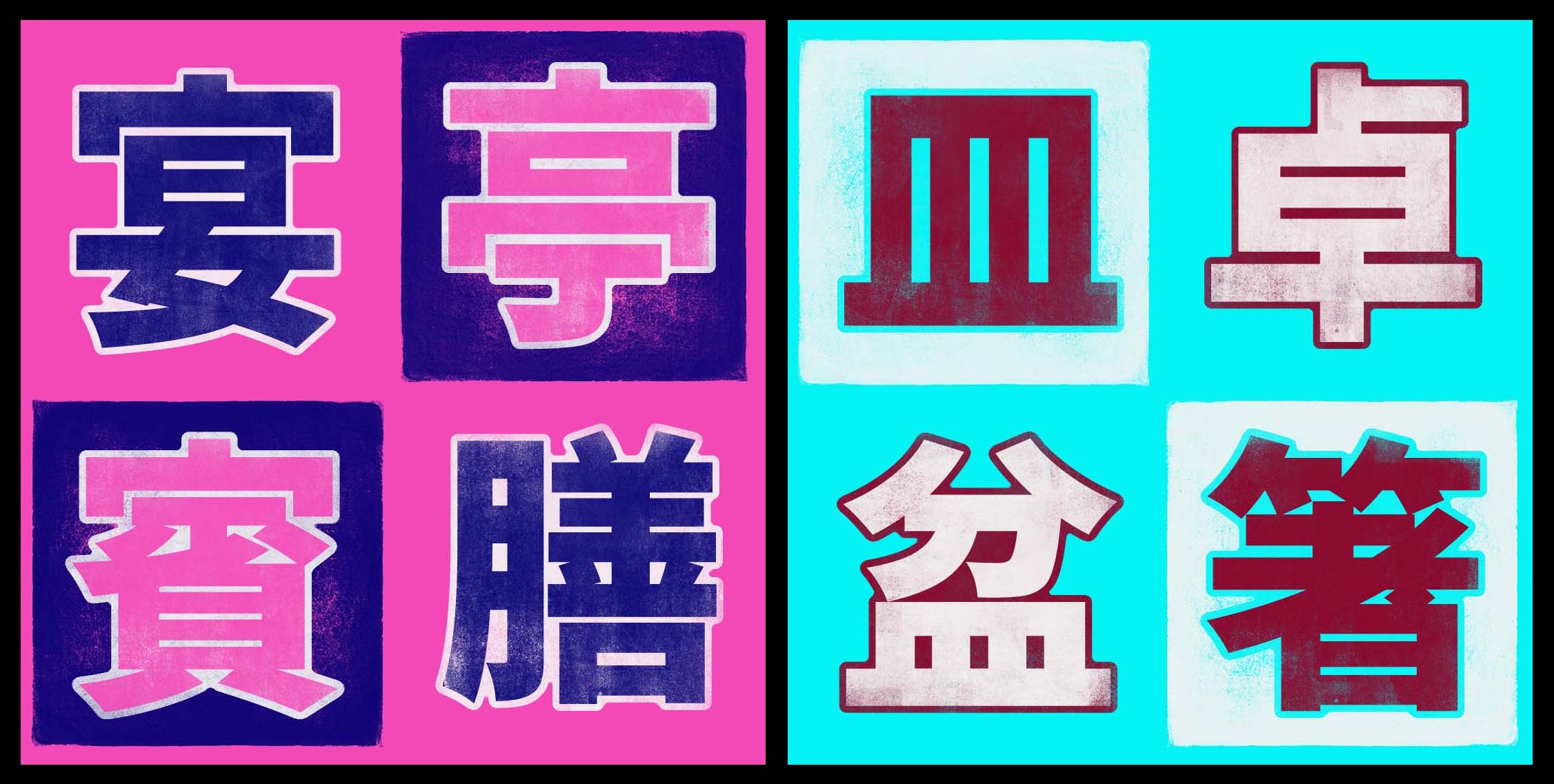
Check out our two newest kanji essay Thematic Bundles! One bundle focuses on hospitality when it comes to formal, elegant feasts and swanky lodging. The other bundle spotlights the tools used in everyday dining: dishes, trays, chopsticks, and tables.
Host with the Most
宴 亭 賓 膳
These essays show how Japan excels in hospitality. From swanky accommodations for VIPs to banquets and wedding receptions, Japanese hosts make everyone feel like guests of honor. You'll learn about traditional restaurants that resemble large, understated houses and that are so expensive that some Japanese people may never dine in one. You'll find out about banquets, where each course comes on its own tray and where the contents, layout, sequence, and placement of each tray on the table are predetermined. And you'll discover the formality and elegance of dining on trays, which is unthinkable in the West.
Tools for Daily Dining
皿 卓 盆 箸
When it comes to equipment for everyday dining in Japan, there are abundant choices. From saucers to soup bowls to share plates, dish designs vary. Dining tables can be so low that people must sit on cushions or tatami mats. Trays for presenting goodies vary depending on whether they're for cakes, other sweets, or tea. And chopstick styles differ according to whether they're for cooking or for a man, woman, or child. Chopstick etiquette is paramount, and the staggering number of chopstick no-nos drives home the concept of copious possibilities, so many of them wrong!
Posted: 2025-06-27,
Tags:
joy-o-kanji
kanji

One bundle helps you play house, spotlighting kanji related to household furnishings. The other bundle introduces four characters with which you can pour yourself into a pursuit, for better and for worse!
Home Furnishings
床 卓 棚 椅
These essays teach vocabulary for home furnishings (futons, beds, tables, desks, chairs, and shelves) and flooring. Two essays explore the alcove known as a tokonoma. You'll also learn the figurative meanings of "putting away bedding" and "flipping over a table." Beyond that, you'll discover terms for "clinical," "power struggle," "barbershop," "putting plans on ice," "position of authority in a government or company," and "hotbed of crimes," even delving into matters of floor area, dentures, air circulation, windfalls, faultfinding, Bon offerings to ancestors, trellises, hospital size, theater stages, a Guinness world record, round-table conferences, and dining platforms across rivers.
Hopelessly Devoted
凝 傾 酔 陶
With these four kanji, you can lose yourself: You can put your heart and soul into pursuing a goal. You can become so passionate that you're obsessed. You can become intoxicated by an onsen or fascinated by music—even drunk on your own charms. You can admire a teacher so much that you're hopelessly devoted. Is all of this positive or negative? On the plus side, a fanatical mindset enables you to create elaborate things, feel deeply, commit fully, and master skills. On the minus side, you will likely annoy others as you slide into monomania and perfectionism!
Posted: 2025-05-31,
Tags:
joy-o-kanji
kanji

Two new bundles show how the Japanese speak of clothing parts (collars, sleeves, and hems) and accessories (hats, umbrellas, fans, and shoes) in both literal and figurative ways.
Accessories as Metaphors
靴 傘 扇 履
The Japanese accessorize in ways that no one else does. Find out about shoes made of rice straw or wood, umbrellas made of paper and oil, and handheld fans in the military. Then there's the figurative take on these items, including expressions about sheltering children, inciting people, padding numbers, and wearing two hats (but in Japan they're shoes!). The shapes of umbrellas, folding fans, and straw sandals have also sparked people's creativity; see what the Japanese perceive as having similar silhouettes!
Fashion Can Be Figurative
襟 帽 袖 裾
Collars, hats, and sleeves can help you make bold fashion statements. These essays show how the Japanese have accomplished that with both traditional clothing and Western styles. Figurative takes on these four kanji astonish even more. Collars are associated with heart-to-heart talks. Hats help you say that you admire someone. The foot of a mountain is figuratively its hem. As such, 裾 can represent "extent of something" and "outskirts," even symbolizing the edge of a coral reef. And sleeves are connected with leaders, passivity, coldness to people, and destiny, plus the wings of buildings, stages, and desks.
Posted: 2025-04-30,
Tags:
joy-o-kanji
kanji

Two new bundles spotlight the places where land meets sea in Japan, creating distinctive shapes, sometimes causing shipwrecks, and inspiring place names and designs.
The Shape of Water
潟 江 礁 湾
Land encircles water in various ways, and each essay in this collection spotlights a different shape of that sort: (1) an elongated body of water that's parallel to the coast and set off by islands or reefs, (2) a narrow place where the sea comes a long way into the land, (3) a circular atoll that is the rim of an extinct underwater volcano, and (4) a portion of ocean partly enclosed by land. These essays focus on famous places (e.g., Niigata, Edo, and Taiwan), explaining how those names connect to certain bodies of water.
A Complex Coastline
崎 浜 浦 岬
Japan boasts a complex coastline, and as these essays show, that's for better and for worse. The numerous capes jutting out into the sea have caused disastrous shipwrecks, one of which exposed inequity that sparked outrage in Japan. But this island nation also abounds in winding beaches, and those gentle curves have influenced the designs of everything from pottery and furniture to family crests. The endpoints of the main islands beckon to tourists who want to visit the southernmost point, for instance. The outline of one cape as seen from space even gave rise to a popular song.
Posted: 2025-04-01,
Tags:
games
kanji

Pop kanji that fit the descriptions! Build your kanji knowledge with our latest fun kanji game.
We're very excited to announce that we've now launched our first standalone game in quite some time:
Kanji Pop. In each round, you're presented with a grid of 16 kanji. You'll be given a series of descriptions, each of which will match one or more of the remaining kanji. Select the correct kanji to 'pop' it and clear it from the grid. Try to complete as many rounds as you can!
All your answers are recorded below the game board for each round, so you can easily
Favorite any you want to come back to later.
In the settings area, you can choose the kanji you want to focus on - by default, the game will focus on kanji with your current usefulness / JLPT level.
You can access Kanji Pop from the PLAY menu at the top of every page, or from the links at the bottom of every page. As with all Kanshudo features, you can also just use
Quick Search.
When you've played a few games, please
let us know what you think!
For more Japanese kanji, word and grammar games to help make your Japanese studies fun, see all our games in the
Play Index.
Posted: 2025-03-31,
Tags:
joy-o-kanji
kanji

Two new
Thematic Bundles focus on the itty-bitty - but in opposite ways. With the kanji in Bundle 55, the Japanese grouse about having too little, whereas an affection for all that is small and cute streams through Bundle 56.
Size of a Postage Stamp
蚊 狭 猫 涙
These four essays enable you to grouse about having too little. Perhaps you receive a pittance of a salary; both 蚊 and 涙 will help you express disappointment and anger about that, but you'll be talking about an animal's tears, not your own. Or maybe you live in a dime-sized space; if so, 狭 will let you complain that your abode feels crowded and cramped. Alternatively, you might gripe that your garden is tiny; calling it as small as a cat's (猫) forehead will get that point across.
Adorably Petite
掌 豆 姫 零
Donald Richie said the Japanese perceive their nation as small (though it's not) because they feel it's gross to be large. Indeed, an affection for itty-bitty things runs through these essays. The prefix 豆- characterizes tiny books, small dolls, and trivia as "miniature." With 掌 the Japanese describe books as "palm-sized" and stories as "very short." The prefix 姫- indicates that a Chinese crabapple is adorably petite or that an animal is diminutive. And with 零 as "small" one can lament the loss of mom-and-pop bakeries and offer advice to small business owners engaged in David-versus-Goliath battles.
Posted: 2025-02-26,
Tags:
joy-o-kanji
kanji
These two bundles belong together, the eight essays collectively constituting a celebration of the fabulous fabrics of Japan. We all know about brightly colored kimonos for formal occasions, but these bundles shine the spotlight on less-famous casual kimonos and show how craftspeople create stunning effects, colors, and patterns with these fabrics.
Casual Kimonos
紺 丈 雰 桁
You may picture kimonos as formal outfits worn on special occasions. With tight sashes and many layers, they take considerable effort to put on and look uncomfortable. But there are also much more casual kimonos for daily wear by working people, such as farmers. These are often made with blurred "kasuri" fabrics featuring a repeating grid or lattice shape. Whereas three essays in this bundle showcase such fabrics in gorgeous blues, the 丈 essay introduces a distinctive yellow silk cloth with striped or checkered patterns. These woven and dyed fabrics became so famous that Hachijo Island was named after them!
Fabulous Fabrics
絞 麻 巾 藍
These essays illuminate how people produce fabulous fabrics using Japanese methods and materials. Two essays delve into techniques such as shibori (Japanese tie-dye), including the unexpected reason commoners came to wear cotton clothes dyed with indigo. Another essay touches on fabric types, such as hemp cloth, as well as the hemp leaf pattern that often adorns clothes for babies. (People associate hemp with healthy and quick growth.) Rich illustrations in all four essays show what people make with these fab fabrics, including tenugui (fancy towels), traditional pouches, and stunning wall pieces. Crafts aficionados are in for a visual treat!
Posted: 2025-01-28,
Tags:
joy-o-kanji
kanji

It feels auspicious when a new year dawns. At such times, symbolism matters greatly, particularly to the Japanese. Appropriately, Bundle 51 presents kanji associated with longevity, milestone birthdays, and New Year's Day itself. January also brings resolutions to whip ourselves into shape, whether physically, mentally, spiritually, or emotionally, so Bundle 52 on training and discipline is quite relevant, as well.
Long-Lived
寿 松 亀 鶴
Though the Japanese live longer than anyone, they pray for even more longevity—for humans and deities alike. These four auspicious kanji are associated with longevity, which is a natural fit for 亀 and 鶴; as one proverb has it, turtles and cranes live thousands of years. Meanwhile, 寿 means "lifespan" and "longevity" in words for those concepts and appears in many terms for milestone birthdays. Finally, because the pine represents long life, thanks to its evergreen needles, images of that tree abound at weddings and on New Year's cards. Similarly, twin pines symbolize a long, happy marriage.
Relentless Improvement
鍛 鋳 錬 冶
Metalworking may not seem relevant to daily life, but these kanji are. Two combine in 鍛錬, enabling people to express desires for toned bodies, sharper minds, and self-discipline. After all, the Japanese relentlessly push to improve themselves and others—hence the exactitude of sushi chefs who rigorously train employees. The bundled characters also shed light on history, from the ancient need for metal (including in mirrors for sacred Shinto rites) to the 1941 mandate to melt down metals, even temple bells. These kanji have even inspired figurative language, as with a term for "forcing into a mold."
Posted: 2024-11-27,
Tags:
sales
offers

It's our favorite time of the year here at Kanshudo, and we're delighted to help you celebrate with a fantastic bargain: 50% off one year of Kanshudo Pro* access!
2024 has been another busy year for Kanshudo. Our biggest ever new feature, a comprehensive JLPT Practice Center, complete with timed sample tests, detailed result breakdowns, and the ability to practice question types independently, is now in beta, and we're working hard on adding the remaining features and more content. (For more information or to apply, see the
blog post.) The JLPT includes about 15 different exercise types per N level, and around 50 across all N levels, so we've added many new exercises and variations which we will gradually roll out into other parts of Kanshudo.
Set yourself up for Japanese success in 2025. Kanshudo is the leader in personalized Japanese learning, and the most effective way to learn Japanese:
Kanshudo will help you master kanji, hiragana, and katakana, along with Japanese grammar and vocabulary, as fast, effectively, and enjoyably as possible! Kanshudo is used by over 210,000 Japanese learners, with
proven results. Act now and get Pro access for less than 25 cents per day!
- Valid for any annual plan (Kanshudo, Kanshudo + Joy o' Kanji, Kanshudo + AI) for users without a current Pro plan
To view a video introduction to Kanshudo and our holiday sale, click
here!
Posted: 2024-11-27,
Tags:
joy-o-kanji
kanji

As these bundles show, we cannot always be strong and dominant. One collection spotlights the inevitable process of weakening and dying, showing how to discuss this in terms of individuals, vegetation, and whole countries. The other collection features the ultra-important topic of using humble language in Japanese and how doing so completely alters one's speech.
Vicissitudes
朽 枯 衰 萎
This collection may seem bleak. The essays spotlight withering plants, rotting trees, and entire nations in decline. The bundle focuses on losing physical abilities and dying of old age. And the 萎 essay touches on dampened hopes and sagging spirits. But the most-common 朽 word characterizes artworks as enduring. And 枯 can mean "to mature," applying to both people and technology. As that essay shows, the Japanese have an odd affection for dead trees, also using 枯 in fun proverbs. Finally, the study of 衰 reflects that yes, decline occurs, but so does prosperity; vicissitudes are inevitable parts of life.
Humble Pie
謙 拙 弊 遜
Here one finds all aspects of humble language: a detailed exploration of that linguistic concept (in the 謙 essay), self-deprecating pronouns, humble prefixes, and ways of putting down one's work or one's company. Two of the four kanji join forces in a noun for "modesty; humility" and constitute alternate renderings of へりくだる (to deprecate oneself and praise the listener). Although 遜 means "humble, inferior," aligning with the other three kanji, the Japanese typically negate that humility with 不, ending up with arrogance, which takes this bundle in an unexpected direction.
Posted: 2024-10-30,
Tags:
joy-o-kanji
kanji

Trees soar to great heights in two new bundles. One focuses on what the cherry, pine, cedar, and willow symbolize to the Japanese. The other collection shows how Japanese craftspeople make the best use of cedar, mulberry, willow, and persimmon.
Emblematic Trees
桜 松 杉 柳
These essays showcase four types of trees that afford great pleasure. The Japanese love seeing rows of them along rivers, the seashore, and avenues (especially on the world's longest tree-lined road), and people famously picnic under cherry blossoms. To the Japanese, the pine, cedar, willow, and cherry also symbolize key qualities: transience and mortality (the cherry); longevity, vitality, and sincerity (the cedar); emotional flexibility, weakness, sadness, and thinness (the willow); and superior rankings (the pine). Moreover, these trees play key roles in the arts, such as haiku, woodblock prints, ink paintings, lyrics, Noh theater, and ghost stories.
Working with Wood
杉 桑 柳 柿
Japanese craftsmanship is legendary, and the artisans know well how types of wood will behave, whether in chopsticks, barrels for soy sauce and saké, or traditional paper. One kind of tree grows so fast that it greatly aided postwar reconstruction. Another type is suitable for alcove posts and chests of drawers, being hard and shiny with a distinctive woodgrain pattern. A third sort is hard but easily cracks, making it ideal for paneling in traditional furniture and Japanese umbrellas. The last type is pliable and can become everything from wicker to toothpicks, also having medicinal properties. See which is which!
Posted: 2024-09-30,
Tags:
joy-o-kanji
kanji

Two new bundles put the spotlight on animals. One focuses on what the dragon, tiger, crane, and turtle symbolize in both positive and negative ways. The other collection shows how Japanese view the cats, monkeys, deer, and bears that surround them, whether at home, in city parks, or on trails through the wilderness.
Strongly Symbolic Animals
竜 亀 虎 鶴
English speakers see cats and dogs as enemies, but the Japanese and Chinese perceive the dragon and tiger as well-matched rivals. The dragon symbolizes everything from imperial power and water to China itself, whereas the tiger represents earthly matter and India, also inspiring scads of expressions about risks. Meanwhile, both cranes and turtles are emblems of longevity and good fortune. Moreover, the crane appears in proverbs, paintings, origami, ceramics, fabrics, poems, Noh dramas, songs, folktales, and even math problems, as well as figurative expressions, whereas the turtle symbolizes slowness, wisdom, experience, divisiveness, ugliness, and sexual attractiveness.
Omnipresent Animals
猿 猫 熊 鹿
Being in Japan means being aware of certain omnipresent animals: the deer who bow to visitors in Nara; the monkeys who bathe in onsens and who fill Monkey Park on Shodoshima; the household cats who have inspired countless sayings, including one meaning "every Tom, Dick, and Harry" because cats are everywhere in Japan; and the fearsome bears who have necessitated bear bells on trails. This bundle shows how the Japanese relate to these species in visual art, in literature from folktales to famous novels, in maneki-neko figurines, in carvings of the three wise monkeys, and more.
Posted: 2024-08-31,
Tags:
joy-o-kanji
kanji

From pride to shame, two bundles illuminate powerful emotions. The insect bundle (which includes essays about the mosquito and bee) dovetails naturally with the collection on skin. And all four bundles differentiate kanji or words with similar meanings.
Bugging Out
蚊 蛍 昆 蜂
As these essays show, people's relationships to insects run the gamut. Mosquitoes annoy, bite, or even kill us, so we repel them. The beloved firefly has inspired poems, songs, paintings, tourism, and firefly parks. Bugs play key roles in "The Tale of Genji," famous manga, one film, and photographs. Insects also serve as food; the Japanese eat locusts and bee larvae, as well as honey (which can become wine and medicine). But bee stings hurt badly, so there's that! Finally, insects have given rise to fun Japanese figurative language about ephemerality, hard work, and much more, as many quizzes reveal!
Skin Deep
潤 燥 肌 膚
A Facebook friend posted pictures of once-gorgeous actors with wrinkled, dried-up faces. His caption: "Moisturize, people!" These essays convey the same message. The ones on 肌 and 膚 provide a primer on skin, including terms for dermatological problems, ads for onsen water that exfoliates skin, a photo of skin-friendly soap, and phrases likening skin to mochi, snow, and eggs. Essay 1757 also cites Confucian ideals about not damaging skin, and an essay 1704 quiz asks what color Japanese people think they are. Essay 1528 focuses on dehydration, including that of skin. And essay 1379 showcases marketing copy about moisturizers.
Pride: Positive or Poisonous
誇 慢 玩 傲
These essays are practically meant to be read together. Sizable passages in essays 1233, 1837, and 2009 differentiate 誇, 慢, and 傲. The bundle presents positive types of pride, including healthy self-regard, restaurant signs about proudly serving noodles, and pride in one's college, hometown, historical buildings, or advances such as the Shinkansen. The collection also shows how the Japanese condemn arrogance, boasting, hyperbole, and ostentation, an aversion originating with a Buddhist view of pride as a "poison." Because 玩 has to do with toying with others, essay 1982 also touches on arrogance multiple times.
Dying of Embarrassment
肩 恥 羞 膝
The longer you live, the more shame you suffer, says an old Japanese proverb. Shame can involve feeling exposed. The Japanese experience deep embarrassment about misusing words (and kanji!). The exposure might be literal; essays 1572 and 2031 mention how evacuees feel when fleeing a disaster naked. Indeed, the body provokes much shame; essay 1572 features a shocking quiz with恥 (shame) in five genital-related words. Shame has its own body language. Essay 1212 on 肩 presents a common term related to shoulder position and shame, and essay 2100 discusses shame-filled, head-on-the-floor prostration when apologizing for a grave error.
Posted: 2024-08-02,
Tags:
jlpt

We're very excited to announce the beta of a major new section of Kanshudo: the JLPT Practice Center. The new center will enable you to take full length timed practice tests using the same question types and scoring as the live JLPT. It will help you to identify any weaknesses, and address them.
The JLPT, or Japanese Language Proficiency Test, now about 40 years old, is the most widely adopted certification of Japanese language proficiency for non-native speakers, and is taken by about a million students every year. Our new system covers all parts of the JLPT, including kanji / vocabulary, grammar, reading and listening.
We're launching the beta with the first N5 practice test in place - over the next few weeks, we'll be adding more N levels, more practice tests for each level, and features to enable you to practice specific question types.
As a side note, thank you to all of you who have expressed interest in joining the betas for several other features we have in development. All of those features are still coming, but we wanted to get this JLPT feature (along with another key new AI-related feature we're working on) launched first.
Posted: 2024-07-31,
Tags:
joy-o-kanji
kanji

The four newest bundles provide a crash course in the Japanese arts. One focuses on manga, another on calligraphy, and a third on the artistic mindset, as well as genres from painting to woodworking to tattoos. As for the fourth bundle, it's all about fear. That might seem unrelated, but being an artist means overcoming fear of failure and forging into a mental space where creativity brings on fearlessness.
Fear Factor
虞 恐 怖 惧
Do these kanji frighten you? After all, they overlap considerably. You could render おそれる (to fear) with all four characters, and people often use 恐 and 怖 interchangeably to convey myriad fears (e.g., of business risks). But this bundle makes important distinctions. You'll see that 恐 connects to respect (e.g., for Nature's power), politeness, financial crises, and uncertainty about the future. The essay on 怖 explores uniquely Japanese phobias. Meanwhile, 虞 expresses concern and caution in the face of threats. And 惧 mainly relates to endangered entities (species, occupations, or railways) and the fear of extinction.
The Meanings of Manga
娯 撤 漫 勃
This bundle provides a solid introduction to manga, especially essay 1838, with its definitions of "manga" and related vocabulary, a manga history, a list of manga genres, and explanations of the symbols used in these cartoons. Essay 1238 supplies essential context about the history of amusement in Japan, including a manga magazine. Essay 2113 discusses the sudden rise of the manga and anime subcultures in the 1970s, which led to classic works inspired by Osamu Tezuka, who started the so-called manga revolution. And essay 1630 showcases Shigeru Mizuki's epic manga about World War II, with translations of four panels.
Inkblots
朱 跡 墨 痕
Japanese calligraphy reflects the state of an artist's mind, spirit, and body. In one novel, a character studies her father's brushstrokes to assess his health. Applying ink to paper is soulful; one leaves behind traces of oneself that way. As essay 1821 shows, Zen has influenced sumi-e (ink paintings). That essay examines calligraphy and sumi-e from all angles, as do the other essays to some degree, including the way to liquefy inksticks (a meditative practice), the red marks with which teachers correct calligraphy, the vermilion stamps that serve as calligraphers' signatures, and the significance of bold strokes versus diluted ones.
The Artistic Mindset
彩 匠 彫 緻
This bundle is a masterclass in the artistic mindset. Essay 1290 celebrates vibrant colors, whether for painting with watercolors or oil or for designing spaces. Essay 1388 explores traditional craftsmanship, particularly highlighting the beauty of Japanese carpentry and the rigors of apprenticing for ages to master a skill. Essay 1590 covers several fields, from carving wood, making sculptures, and engraving metal to creating traditional tattoos that form a complete picture over much of the body. Essay 2065 extols the virtues of extreme detail, especially in doing elaborate drawings that bring dreamworlds to life with extraordinary realism.
Posted: 2024-07-01,
Tags:
joy-o-kanji
kanji

One of the best things about learning kanji is seeing how the Japanese take symbols for objects (from eyebrows to bubbles in this selection) and spin off rich idioms. We find plenty of that in these four bundles, as well as fanciful beliefs about how weather works. A fourth bundle presents intriguing connections between smells and behavior, as well as fascinating relationships among the kanji in that bundle.
Scents and Sensibility
香 臭 嗅 匂
These four kanji are practically symbiotic. The verb 嗅ぐ takes 香り, 臭い, and 匂い as direct objects. Although people usually reserve 臭い for stenches and 匂い for fragrances, these words (both におい) can be interchangeable. Each could convey that something "smacks of" a quality. Whereas 臭い can mean that a man looks suspicious, as if he "smells of" a crime, 嗅 enables people to sniff out crimes! Three of the kanji have ties to religion, and with 香 as "incense," that connection is strong.
Reading the Face
唇 顎 眉 頰
From the eyebrows to the lips, we express emotions nonverbally by twitching parts of the face, blushing, or smiling. Learn how the Japanese use 眉 (eyebrow) in terms related to worry, melancholy, relief, and disapproval. Read about charming perceptions of facial structure; an eyebrow is an "eave" for the eye, and other parts are metaphorical girders, vehicles, and gates. Discover rich idioms, such as "scorched eyebrows" and "fox pups have white cheeks," and see how the Japanese associate certain facial parts with exhaustion, delicious food, ordering others around, travel expenses, and long-term financial considerations.
The Inevitable Storm
嵐 稲 梅 雷
Storms produce down-to-earth concerns about when the rain will begin, the damage to crops and buildings, and more. Such grounded thinking permeates these essays. But they also include wildly fanciful beliefs: lightning impregnates rice, thunder is a scolding from a god who might wield a hammer, and a chant or a charm affords protection from lightning. Weather inspires copious metaphors, such as "political storm," "tempest in a teapot," and "thunderous applause." There's also 花に嵐 (inevitable storm that blossoms have to face); literally, it knocks off blossoms, and figuratively it means that one is bound to encounter difficulties.
A Taste of Transience
浮 泡 夢 露
Buddhist views of impermanence once influenced words for "fragile life," words that include 浮. Later, a fear of death inspired living hedonistically in the "floating world"; related terms again feature 浮 (as "transient"). Because bubbles vanish without a trace, 泡 figures into words for "short-lived company" and "fringe candidate" (one who quickly disappears). Dreams (夢) slip away every day, and several words for "fleeting" combine 泡 and 夢. Similarly, dew evaporates, and one famous poem likens the poet's vanishing life to dew (露) and compares his world to a dream (夢).
Posted: 2024-06-28,
Tags:
ai

We are delighted to announce that we are increasing the number of AI credits included in all 2024 pricing plans! Prices are staying the same - you just get more value from Kanshudo!
Kanshudo monthly and annual subscriptions (with or without Joy o' Kanji essays) will now include 50 credits per month. AI monthly and annual subscriptions will now include 500 credits per month. The additional credits will be applied to your subscription automatically at the beginning of the month (if you are on an annual plan) or when your next payment is made (if you're on a monthly plan).
AI credits can be used for
AI Sentence Correct - type or speak a Japanese sentence, and Kanshudo will correct any mistakes, supply alternatives with a similar meaning, and provide other commentary. Sentence Correct is a fantastic way to develop confidence in your Japanese, as well as to ensure important communications are error free. For more information read the
blog post.
Additionally, AI credits can be applied to a series of new AI features we are working on. One of the first is a fantastic new way to learn Japanese grammar - we'll be saying more about this exciting new idea very soon.
If you run out of AI credits in a month, you can purchase more - we've now added the ability to purchase a block of 500 credits. Just go to the AI credits section in your
account page - here's a
direct link.
Posted: 2024-05-30,
Tags:
joy-o-kanji
kanji

When multiple kanji represent a concept, how do you know which one to use at any given time? Two of these bundles showcase characters with similar meanings, illuminating not only the overlaps but also the key differences. A third bundle presents kanji with the "rain" radical (雨); the eye easily confuses them, though the meanings are distinct. The last bundle consists of body part kanji, again with a shared radical (月) but also with comparable cultural significance.
Central Parts
軸 髄 枢 芯
All four kanji represent centers—with slight differences. An axis (軸) lies inside something (a planet, feather, or scroll), as does marrow (髄) and a core (髄 or 芯). Other objects (e.g., doors) revolve around pivots (枢). The body contains specialized brain centers, as well as an axis, marrow, and a core. More abstractly, an axis occupies the center of one's existence. Also, one feels things to the core, the essence of an activity (e.g., aikido) is vitally important, and 枢 helps symbolize the center of the economy, of power, and more.
Pleasure and Leisure
悦 暇 娯 愉
These four essays provide the key to happiness. With 暇 one has free time, whether a vacation, a leave of absence, or simply time to kill. Then 娯 provides destinations for having structured fun, including amusement parks, theaters, or venues for karaoke, pachinko, or horse races. With 愉 people relax into a carefree sense of fun and pleasure. And with 悦 one can experience joy and delight in a variety of things, including hospitality, a sense of progress, food, artistic masterpieces, a college acceptance, religious rapture, and sexual ecstasy.
Droplets of Moisture
霜 曇 霧 露
A book title mentioned in the 霧 essay collectively refers to clouds, rain, and fog by citing their common "rain" radical. That unites the kanji in this bundle, as well. All four essays explore the realities of damp weather, as when fog grounds planes, frost damages crops, and people seek shelter from the elements. Because of such challenges, these characters make great metaphors. The Japanese associate 霜 with hardship; 曇 with life's ups and downs, as well as gloomy feelings; 霧 with mental fog; and 露 with transience. Because 露 symbolizes vanishing realities, that kanji in particular has inspired poetry.
Limbs and Joints
肩 肢 膝 肘
Characters for body parts often feature 月 radicals. That's true here, but these four kanji have much more in common. First, limbs and joints are prone to soreness, injury, and disability, requiring various healing modalities. Second, the shoulders, elbows, and knees can show how we're relating to other people; the Japanese associate these body parts with lending support, sitting close for an intimate talk, and reining in someone's behavior. Those body parts also play roles in martial arts and sumo. Finally, one's stance can express seriousness, tension, pride, shame, discouragement, respect, remorse, or a lack of reservedness.
Posted: 2024-05-24,
Tags:
topics
We hope you are all enjoying our latest AI feature,
AI Sentence Correct! We have some enhancements for Sentence Correct coming soon, as well as another exciting new AI feature.
In the meantime, we've been steadily adding
Topic Lessons, with 14 new lessons covering a range of ability levels, and including new games, quizzes, reading and listening material:
Numbers 1 to 100
BEGINNER
Question Words - 1
BEGINNER
Time and Schedules
BEGINNER
Musical Instruments -
がっき
楽器
UPPER BEGINNER
The Weather - Small Talk 1
UPPER BEGINNER
Transportation
UPPER BEGINNER
‘Hot’ and ‘Cold’ – Differentiating between the Different Words
INTERMEDIATE
End-of-Year Customs -
ねんまつ
年末
ねんし
年始
の
しゅうかん
習慣
INTERMEDIATE
How to Use Local Buses in Japan
INTERMEDIATE
あし - (A Fable)
INTERMEDIATE
New Year's Eve Soba -
としこ
年越
しそば
UPPER INTERMEDIATE
New Year's Eve -
おおみそか
大晦日
UPPER INTERMEDIATE
The Glow of Fireflies -
ほたる
蛍
の
ひかり
光
UPPER INTERMEDIATE
Posted: 2024-05-02,
Tags:
joy-o-kanji
kanji

Thematic Bundles help you see differently! See the world from mountaintops! See time sliced up in unexpected ways! See through the soft haze of alcohol! See pottery in a whole new way! And see how to hang in there when life requires great tenacity. Learn the joy of wandering on a whim and the satisfaction of crossing rivers when you come to them. Find out how to move at different speeds. Most of all, see how characters connect in ways that you might otherwise miss.
Lofty Views
岳 峠 峰 麓
Sometimes a mountain isn't just a mountain. See how the Japanese associate certain parts with the peak of a crisis or with a risky situation that leaves no room for error. Find out how most of the population reveres mountains as sacred and how they act on these beliefs. Discover a legendary rivalry between two great mountains, one that proved transformative for both. Learn how particular perceptions of mountains have inspired famous artwork. And see how, to the Japanese, the foot of a mountain appears to be the hem of its "skirt"!
Concepts of Time
旬 昔 暦 頃
The sun, moon, and seasons are natural clocks, but time is also a construct. As this bundle shows, the Japanese divide time into units of 10 (days, months, or years), also perceiving 72 microseasons. Japan has observed lunar, solar, and other calendars, plus 60-year cycles and multiple era systems. For all this precision, people approximate time with "the good old days," "once upon a time," or "around the time." They also have a particular take on time when saying that a food is in season, "at your age," and "It's a great time" for a certain activity.
Do or Die
執 遂 徹 粘
Tenacity binds these essays together, sometimes as the secondary sense of characters. The literal stickiness of 粘 (e.g., natto, clay, and snail mucus!) inspired the figurative meaning "tenacity," as in "stick-to-it-ness." Mainly, 執 involves performing tasks (often by wielding long, thin objects such as pens or batons), but as "tenacity" this kanji drives words about persistence, obsession, and grudges. The whole bundle showcases adherence to beliefs and goals, doing things thoroughly, and seeing things through (e.g., athletes who accomplish greatness). These essays also depict the dark side of such devotion—namely, obstinacy, self-centeredness, discord, monomania, ill health, and more.
Booze 101
酵 醸 酔 酎
The 酔 essay examines intoxication from every angle, including great Osaka bars, studies of drunkards, tipsy cats and wasted elephants, and hangover prevention. The other three essays detail the processes of making saké, shochu, and beer, exploring all of the following (and much more): the ingredients in alcohol, the intricacies of fermentation, modes of distilling and brewing, malt, an old method of making saké by chewing rice and spitting it out, saké as a living entity, the image problem saké once had in Japan, alcoholic offerings to gods, the health benefits of shochu, and using alcohol to make food.
Rate of Change
徐 漸 頓 勃
This bundle presents life at a range of speeds. Two essays focus on gradual change—for better and for worse—in everything from health to the economy. By contrast, three essays touch on sudden developments, including the outbreak of war, a surge of energy, the rapid rise of subcultures, getting an erection, standing up abruptly, bursts of wit, quick enlightenment, and sudden death. Tying these extremes together, 頓 runs the gamut; when it means "to stay in place" or "stop," this kanji involves setbacks and stalemates, but as "sudden" it pops up in words for wild, crazy behavior.
Pottery Is Paramount
皿 陶 鉢 丼
In Japanese cuisine, beautiful presentations are paramount, beginning with the pottery. Essay 1650 explains the philosophy of such aesthetics, including the Zen idea that the transformation of clay into teacups is a religion itself. The other three essays provide vocabulary that distinguishes between vessels (dishes, bowls, and cups) of different sizes and depths. Those essays explore the terms donburi, hibachi (not what you might think!), suribachi, and hachimaki. Moreover, those sources show how, from a kanji perspective, the crowns of our heads are upside-down pots or flat dishes, also explaining how one might eat a "big serving of the head"!
Following Whims
随 漂 浮 浪
All who wander are not lost, at least not with this collection of kanji. They largely represent the happiest forms of aimless wandering, hedonism, freedom from worldly concerns, and wanderlust. Yes, this can veer off into extramarital affairs, restlessness, vagrancy, and unemployment. One kanji figures into a term for "failed college applicant." But another relates to essay writing as "following the pen" wherever it wishes. And two essays in this bundle touch on the Sanka, Japan's homegrown nomads and original hippies. Let freedom ring!
Crossing Waterways
越 沖 渡 遡
A waterway poses challenges to travelers, but such obstacles are surmountable, as all these kanji demonstrate. Both 越 and 渡involve crossing rivers via bridges or boats, and 越 is in a town name that actually means "crossing the river." As 沖 often pertains to fishing some distance from the shore, crossing that water reaps benefits. With 遡 one goes upstream, either along the shore on foot or in the river itself if one is a salmon looking to spawn. The carp, which famously swims upstream, symbolizes courage, spirit, and achievement for conquering the challenges of a waterway.
Thematic Bundles are available for purchase at the discounted price of $8. (Four essays would normally cost $12.) You can also access bundles with essay credits, which are allocated as part of joint
Kanshudo + Joy o' Kanji subscriptions.
Joy o' Kanji essays are a great way to deepen your insight into specific kanji, and bundles will introduce you to new connections and more profound meanings. Try a
Thematic Bundle today!